
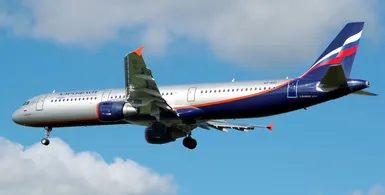
Aeroflot isn’t just a brand name. It is a ghost of the Soviet Union that still flies today. The airline traces its roots back to 1928 when it was founded as Dobroflot. That name came from two smaller carriers: Dobrolyot (1923) and Ukvozdukhput (1925). They connected Moscow to Gorky, Kiev, Kharkov, and Odessa.
In 1932, the state reorganized them into Aeroflot. Growth was aggressive. By 1935, the network stretched from Leningrad to Vladivostok. It covered the Black Sea, the Caucasus, and Central Asia.
For decades, Aeroflot was the only civil aviation provider in the USSR. It handled passengers, freight, crop spraying, and ambulance services. There was a strict rule. Only Soviet-made aircraft were allowed.
This restriction didn’t stop innovation. In 1956, Aeroflot launched the world’s first civilian jet service using the Tu-104. It also helped develop the Tu-144. This was the first supersonic airliner. It flew in 1968, before Concorde.
Peak Power and Global Reach
By the late 1980s, Aeroflot was a behemoth. The fleet included 1,300 airliners. Several thousand smaller planes supported them. The routes touched 3,600 cities and towns.
International flights reached over 100 countries. In 1990, the airline carried 138 million passengers. It held about 15% of all global civil air traffic. It flew to every continent. Sometimes even Antarctica.
“Aeroflot was responsible for all civil aviation in the Soviet Union.”
Post-Soviet Restructuring
The collapse of the Soviet Union in 1991 changed everything. In 1992, the airline became Aeroflot–Russian International Airlines. The Russian government remained a majority shareholder. It kept this role well into the 21st century.
Domestic routes were largely abandoned to regional airlines. Aeroflot focused on international travel. The strategy shifted quickly. The airline started buying foreign aircraft. Airbus and Boeing planes entered the fleet in 1992.
In 2000, the name shortened to Aeroflot–Russian Airlines. It remained a leader in flights from Russia to more than 40 countries. The transition from state monopoly to competitive carrier was messy but necessary.
The airline we see today carries that history. It is no longer the only option in the sky. But it remains the largest. The shift from Tu-104s to Airbus A321s marks a complete era change. The machinery changed. The mandate to connect Russia to the world did not.