
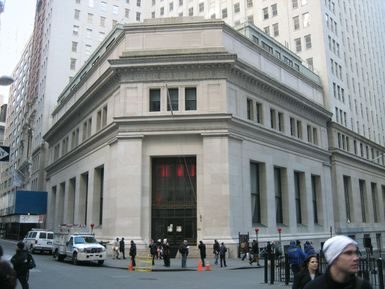
The building at 23 Wall Street stands as a physical monument to American finance. Designed by Trowbridge & Livingston, it was once the headquarters for J.P. Morgan & Co., a firm so powerful it earned the nickname The House of Morgan. Now listed on the National Register of Historic Places, this granite fortress hints at the sheer scale of the institution that grew from its roots. Today, that legacy lives on in JPMorgan Chase & Co., the largest bank in the United States by market capitalization in 2024.
The modern entity didn’t appear out of thin air. It was born from the December 2000 merger of J.P. Morgan & Co. and The Chase Manhattan Corporation. But the bloodline goes much deeper. Tracing back to 1799, it includes The Bank of the Manhattan Company, founded by Aaron Burr. Another early ancestor was Drexel Morgan & Co., established in 1871. This merchant bank specialized in railroad investments and helped finance the industrial consolidations that created U.S. Steel—the world’s first billion-dollar corporation.
The Aggressive Expansion Strategy
Since the turn of the millennium, the company has grown through acquisition and opportunism. It bought Bank One in 2004. During the 2007–08 financial crisis, it acquired the distressed assets of Bear Stearns and Washington Mutual. The pattern continued in 2023. When First Republic Bank collapsed due to a rapid deterioration in its asset base, the FDIC seized it. JPMorgan Chase bought the assets immediately.
This isn’t just about size. It’s about survival. The bank positions itself as a stabilizer. In the panic of 1893, J.P. Morgan personally organized a syndicate to bail out the U.S. Treasury. He provided $62 million in gold in exchange for government bonds. This replenished reserves that had hit critical levels. A similar move happened in 1907. Several major New York banks were on the verge of bankruptcy. Morgan formed a committee to decide which banks would be rescued and which would be allowed to collapse. His leadership during these crises laid the groundwork for the Federal Reserve in 1913.
How JPMorgan Chase Operates
The bank doesn’t just lend money. It runs a massive financial machine. Operations fall into four core business areas.
- Consumer and community banking (CCB) handles traditional retail services. This includes checking accounts, savings accounts, certificates of deposit, mortgages, auto loans, credit cards, and small business banking.
- Corporate and investment banking (CIB) manages trading, market making, and underwriting. This covers initial public offerings and mergers and acquisitions.
- Asset and wealth management (AWM) manages investments for clients, financial advisors, and institutional investors. These include pensions, endowments, and sovereign wealth funds.
- Commercial banking (CB) serves midsize businesses, municipalities, real estate investors, and nonprofit organizations. It offers many of the same products as the other segments but tailored to this specific client base.
Technology cuts across all these segments. The annual technology budget hit $15 billion in 2025. This money funds the Chase mobile app, cybersecurity, and electronic trading for the retail market. It also supports algorithmic trading for the CIB division. In recent years, the company has invested resources into blockchain technology, digital asset services like cryptocurrency, and artificial intelligence applications.
The Glass-Steagall Split
The regulatory environment changed drastically in the 1930s. The stock market crash of 1929 led to the Glass-Steagall Act, also known as the Banking Act of 1933. The goal was simple. Curbing excessive risk-taking to reduce the likelihood of future crises. The key requirement was the separation of investment and commercial banking activities. This was meant to safeguard bank depositors from speculative risks.
J.P. Morgan and Co. made a strategic choice. It kept its commercial banking activities. It spun off its investment activities into a new entity called Morgan Stanley. The new firm was co-founded by J.P. Morgan’s grandson, Henry Morgan, and executive Harold Stanley. This split defined the industry for decades. It forced banks to choose between holding deposits and underwriting securities.
Why This Matters for Your Money
You might think these historical maneuvers are distant echoes. They aren’t. The structure of JPMorgan Chase affects how your money is held and invested. The separation of commercial and investment banking was designed to protect you. When a bank takes speculative risks with depositor funds, it endangers your savings. The Glass-Steagall Act tried to create a wall. That wall eventually came down, but the risk remains.
When JPMorgan Chase acquires a distressed bank, it absorbs their bad debts. This stabilizes the market but also consolidates power. You have fewer options for banking services. This concentration can lead to higher fees and less competitive interest rates. The “too big to fail” status means you are effectively insured by the government. But that safety net isn’t free. It is subsidized by taxpayers and regulated by the state.
The technology budget of $15 billion sounds abstract. But it drives the apps you use and the security of your data. It also fuels algorithmic trading. These algorithms can move markets in milliseconds. They create volatility. They also create liquidity. Which one you experience depends on your perspective as an investor or a consumer.
The House of Morgan on Wall Street is a historic site now. But the entity it spawned is still very much in motion. It continues to acquire, expand, and influence the global financial system. Understanding its history helps explain why the banking sector looks the way it does today. The roots are old. The branches are everywhere. And the shade they cast is long.
The story of JPMorgan Chase isn’t just about money. It’s about survival, regulation, and the willingness to eat competitors when the market crashes.
The Corporate Shift That Defined Modern Banking
The transition from private partnership to public corporation wasn’t just paperwork. It was a strategic pivot. J.P. Morgan and Co. incorporated in 1940. Two years later, in 1942, it went public. The IPO issued 16,500 shares. Capital flowed in. Growth followed.
This structure allowed for aggressive expansion.
In 1959, the firm merged with Guaranty Trust Company of New York. Founded in 1864, Guaranty was a heavyweight. The new entity became Morgan Guaranty Trust Company of New York. Consolidation wasn’t a trend. It was the business model.
By 1969, the industry was shifting. Bank holding companies became the dominant structure. J.P. Morgan joined the wave. This reorganization facilitated a massive consolidation period across U.S. banking in the late 20th century.
The name changed back to J.P. Morgan and Co. in 1988. By the century’s end, the firm held a dual throne: leading U.S. underwriter of corporate debt and a globally respected investment banking house.
The Regulatory Earthquake
You cannot understand modern banking without the Gramm-Leach-Bliley Act.
Passed in 1999, this law reshaped the landscape. It repealed Sections 20 and 32 of the Banking Act of 1933. These were the Glass-Steagall provisions. They had kept commercial and investment banking separate since the Great Depression.
Their removal was a massive deregulation move.
The act also strengthened Federal Reserve oversight. Bank holding companies and state member bank affiliates now reported regularly to the Fed. But the headline was the end of the wall. Commercial banks could now own investment firms.
J.P. Morgan and Co. used this opening immediately. Investment banking operations expanded. The playing field was leveled for the biggest players.
JPMorgan Chase: The 21st Century Monster
The 21st century began with a marriage of convenience.
In 2000, J.P. Morgan and Co. merged with Chase Manhattan. The result was JPMorgan Chase & Co.
Why did this matter? Chase brought personal and small-business banking. J.P. Morgan brought investment banking, government securities, and commercial expertise. The combination created a universal bank. It covered every layer of the financial food chain.
Consolidation continued. Bank One of Chicago merged with JPMorgan Chase in 2004. Most of Bank One’s operations adopted the Chase brand. The name stuck. The footprint grew.
Then came 2008.
The Crash and the Bailout
The subprime mortgage crisis didn’t just hit JPMorgan. It hit the entire financial sector. Liquidity contracted worldwide. Mortgage-backed securities plummeted in value. Billions in losses accrued.
The government couldn’t let the system collapse.
Under the Emergency Economic Stabilization Act, the U.S. government invested $25 billion in JPMorgan Chase in late 2008. The goal was simple: prevent further damage to the U.S. financial system.
The bailout wasn’t just charity. It was a strategic acquisition.
In September 2008, the federal government seized Washington Mutual, Inc. The bank holding company failed. Its assets were sold to JPMorgan Chase. It was the largest bank failure in U.S. history at the time. JPMorgan grew by eating the wreckage.
The Cost of Complexity
Survival doesn’t mean perfection.
In May 2012, JPMorgan Chase announced a major loss. An investment unit lost approximately $2 billion. The cause? A complex series of trades in derivatives.
Credit default swaps were involved. The trades were risky. The oversight was lacking. The loss was significant, but not fatal. It was a warning shot.
The firm had grown too big, too fast. The regulatory environment had loosened. The culture had prioritized volume over risk management.
But the bank remained standing. It had absorbed Washington Mutual. It had survived the bailout. It had adapted to deregulation.
The question now isn’t whether JPMorgan Chase will survive. It’s how much damage its next complex trade might cause before the regulators notice.
The market rewards scale. It punishes opacity. JPMorgan has mastered the first. It’s still learning the second.
The 2023 Banking Stress and JPMorgan’s Role
Rate hikes broke things in 2023. Depositors panicked. They pulled cash from regional banks faster than management could react.
JPMorgan Chase stepped in.
It bought First Republic Bank. This was one of three failures that year, alongside Silicon Valley Bank and Signature Bank. The move felt historical. JPMorgan has a habit of stabilizing the U.S. financial system when others crack. It is a specific pattern. Crisis hits. The biggest bank absorbs the fallout. It provides liquidity. It prevents a wider collapse.
But this stability comes with baggage. The company’s history is not clean. It is not without controversy.
Antitrust and Collusion Allegations
Big banks attract big scrutiny. JPMorgan Chase is no exception.
Anticompetitive behavior allegations have been part of its DNA for over a century. Even J.P. Morgan’s role in government bailouts in 1893, 1907, and 2008 has been seen by many as opportunities to expand the bank’s reach. Critics argue these moments were less about saving the economy and more about consolidating power.
Regulatory actions don’t typically involve monopolistic consumer pricing. It is often about collusion. Take the long-running litigation tied to alleged rigging of interest rate swaps. JPMorgan Chase and nine other major banks were accused of coordinating on these derivatives. It creates an unfair playing field. It distorts how costs are passed down to borrowers and investors.
The Mortgage-Backed Securities Scandal
Before 2008, the housing market was rigged. Or at least, that is the accusation.
JPMorgan Chase was accused of knowingly selling faulty residential mortgage-backed securities (MBS). The bank misled investors. It sold toxic assets while hiding the risks. This contributed directly to the ensuing financial crisis.
The cost was high. In 2013, the bank agreed to a $13 billion settlement with the U.S. Justice Department. It was one of the largest penalties in history at the time. It signaled that the era of “too big to jail” was ending, at least on paper.
The London Whale Derivatives Fiasco
In 2012, a trader named Bruno Iksil executed massive credit derivatives trades. He was later dubbed the “London whale.”
The sheer volume of these trades distorted the markets. The bets went wrong. The bank lost over $6 billion.
Regulators took note. JPMorgan Chase paid $1.02 billion in fines to U.S. and U.K. regulators. But the money wasn’t the worst part. The reputational damage was.
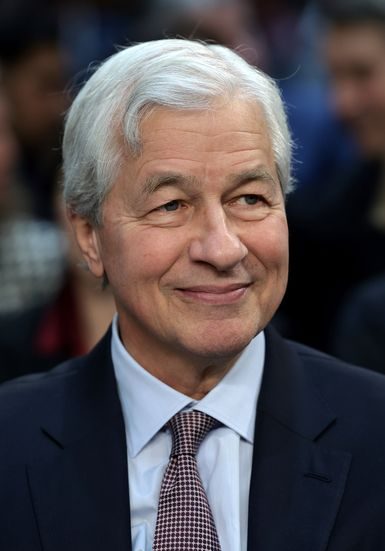
CEO Jamie Dimon dismissed the issue early on. He called it a “tempest in a teapot.” That comment backfired. It made the bank look arrogant. It made the loss look preventable. It highlighted a culture where risk management was secondary to aggressive trading.
Anti-Money-Laundering Failures: The Madoff Connection
Bernie Madoff was JPMorgan Chase’s primary banker.
Despite red flags, the bank failed to report suspicious activity. Madoff’s wealth management business was, as later discovered, the world’s largest Ponzi scheme. The Justice Department confirmed this.
JPMorgan Chase ignored the warnings. It kept the relationship lucrative for the bank.
In 2014, the bank paid $2.6 billion to the U.S. government. This settled allegations that it failed to report Madoff’s suspicious activities to authorities. It raised questions about internal controls. Did traders know? Did compliance miss it? Or did they just not care?
The Jeffrey Epstein Scandal
Jeffrey Epstein was a client from 1998 to 2013.
He was a hedge fund manager. He was also a convicted sex trafficker. The bank terminated its client relationship in 2013. But the timeline is messy. Epstein had been facing multiple investigations and cases since 2005. He died mysteriously in 2019.
In 2023, the fallout continued. JPMorgan Chase paid $75 million to the U.S. Virgin Islands (USVI). This settled a lawsuit alleging the bank turned a blind eye toward Epstein’s suspicious transactions. These transactions supported his illegal operations.
That same year, the bank paid $290 million to several of Epstein’s victims. It was a separate class-action lawsuit. The money didn’t erase the history. It just closed the legal chapter. It asked a painful question for many investors: Where did Jeffrey Epstein get his money? And why did the bank let him keep it?
Market Manipulation and Spoofing
In 2020, JPMorgan Chase agreed to pay over $920 million.
This was to settle a Commodity Futures Trading Commission (CFTC) investigation. The allegation? Market manipulation. It was the largest monetary penalty ever imposed by the CFTC in its history.
Federal regulators found that from 2008 to 2016, the bank placed massive buy orders in precious metals and Treasury markets. The intent was to cancel those orders before execution. This practice is known as “spoofing.” It creates false demand. It pushes prices up. Then the bank sells into the artificial rise. It steals from other traders.
It is a sophisticated form of cheating. And it happened for nearly a decade.
The Enduring Legacy of JPMorgan Chase
JPMorgan Chase occupies a unique position in U.S. financial history.
The foundations were laid by 19th-century figures. J. Pierpont Morgan. Anthony Drexel. Aaron Burr. These names shaped the early American economy. The company’s pivotal role in stabilizing markets during national crises still echoes today. It shapes modern finance.
The House of Morgan may no longer exist in its original form. But its legacy lives on. It lives in the scope, scale, and stature of the institution that bears his name.
Jamie Dimon now leads the charge. He is a chair and CEO as influential in the 21st century as Mr. Morgan was in the late 19th and early 20th centuries. The bank is not just a financial powerhouse. It is a technology-driven firm. It is navigating an evolving business landscape.
Critics remain. They point to the scandals. They point to the size. But the company continues to play a central role. It stabilizes markets during periods of crisis. It leads in innovation. It carries forward the ambitions of its founders.
To finance progress. To manage risk. To remain essential to the functioning of the global economy.
The trade-off is clear. You get stability. You get access to the world’s deepest capital markets. But you also get a system where the biggest players have too much power. Where mistakes cost billions. Where history repeats itself in new forms. The bank is essential. That is both its strength and its burden.