



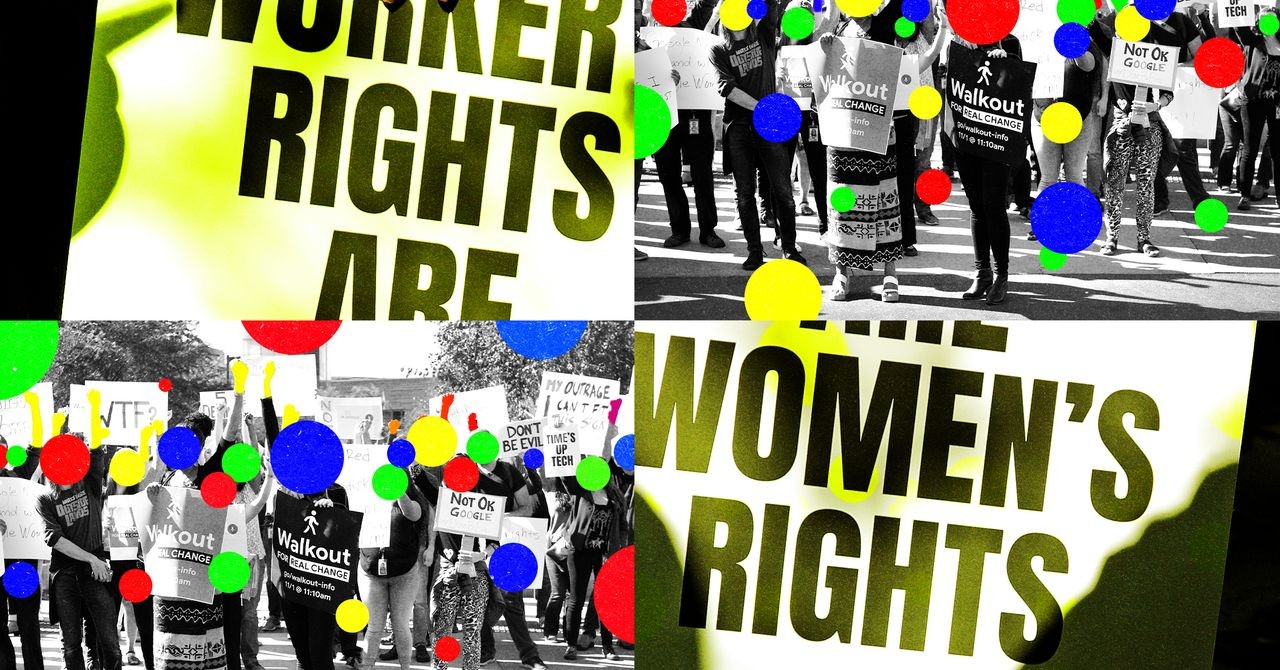
Claire Stapleton wasn’t looking for a revolution when she sat down at her laptop in New York on a Saturday morning in October 2018. She was a marketing manager at Google, raising a toddler, and tired. But she had also been watching the tech giant’s handling of sexual harassment claims with growing disgust.
So, she did something radical. She started a Google Group.
What followed wasn’t just a protest. It was the 2018 Google walkout, a pivotal moment that forced a massive corporation to confront the rot festering beneath its “Don’t Be Evil” branding. Here is the real story of how a handful of employees organized one of the most significant labor actions in Silicon Valley history.
The Spark: From Article 13 to Action
The timing was chaotic. Stapleton woke up at 6 a.m. to emails from her manager, Marion. They were mid-campaign against Article 13, an EU law holding platforms liable for user content. Stapleton’s job was to scream about “#SaveYourInternet” on social media.
But Stapleton knew the truth. Google didn’t oppose Article 13 because they loved users. They opposed it because it limited their power, their liability, and their ability to consolidate control over the internet.
Her mind wasn’t on lobbying tactics. It was on the women’s walk.
By the time she logged on, hundreds of strangers had joined the womens-walk group. The anonymity that usually shrouds corporate life dropped away. People used their real names. The initial outpouring of anger—“I’m so fucking mad”—quickly matured into strategy.
The decision was made within days. The walkout would happen on Thursday, November 1.
Why that date? It was just five days before the US midterms. Waiting longer would dilute the rage. And in activism, rage is fuel.
Building the Machine
You can’t organize a global walkout with vibes alone. Stapleton needed structure. Enter Tanuja, a hyper-organized project manager who recognized an opportunity to break the rules.
They met in a conference room and mapped out a “hub and spoke” model. Local leads in every office worldwide would customize the day, sharing their own stories and reasons for leaving their desks. It was a decentralized network designed to be inclusive and global.
For Stapleton, who had spent years being the “good girl” corporate storyteller, this was disorienting. This wasn’t solitary, self-erasing teamwork. This was solidarity. It was electric.
That night, she got a call from Amr. He warned her to be careful. Google would push back. They were likely monitoring the conversations.
Amr wasn’t your typical Googler. An entry-level engineer (a title he owned without irony), he had organized restaurant workers for the Fight for $15 before joining Google. He referred to management as “the bosses.” He told Stapleton that employees had an obligation to use their privilege to check Google’s power.
The Conscience of Google
Amr connected Stapleton with Meredith Whittaker, another skeptic. Whittaker was famous for opposing Maven, a Department of Defense project using Google AI for drone targeting.
Whittaker, a former Googler who had debated the internet’s father, Vint Cerf, about the ethics of war technology, represented a “subterranean conscience” at the company. She had argued that you couldn’t build the machinery of war while claiming to be ethical. Cerf had offered the hollow argument that technology is neutral, like a hammer. Whittaker dismantled him.
Meeting Whittaker and Amr made Stapleton realize she wasn’t alone in her disillusionment. There was a network of resisters hiding in plain sight.
However, not everyone agreed on the method. Amr was skeptical of the walkout. To him, it was too big, too fast. Traditional organizing happens table by table, building deep, risk-sharing bonds over time. There are no shortcuts.
But the momentum was already there. People were offering support, asking how to help. The train had left the station.
The 350 Responses That Changed Everything
Amr’s questions haunted Stapleton. Why were people so angry? What exactly had happened?
On Monday night, she sent an email to the listserve. She included a simple Google Form asking one question: “Why are you walking out?”
She expected a dozen replies. She got 350.
The responses were not polite. They were a sobering monument to a culture of discrimination, gaslight, retaliation, and bad HR. They detailed the gap between Google’s progressive image and its daily reality.
Real Stories from the Footage
- The Harassing Director: One employee described a director who pressured women into wearing heels, mocked their bodies, referred to clients as “battered women,” and told racist jokes. He was eventually promoted three times.
- The Sexual Assault Cover-up: At a resort off-site, a director allegedly facilitated intoxicated non-Googlers entering the room of a sleeping female assistant. HR investigated. Two men lied to protect the director. The victim left the company. The director was promoted.
- The Boys Club: A UK team excluded women from male-dominated social activities. When women wrote to HR, they were retaliated against by managers who cried and told them to never complain again.
- Retaliation for Sick Leave: An employee took sick leave and was told to leave the team or face worse ratings. HR investigated, found bad faith in the manager’s actions, but cited “business needs” as justification. They threatened the employee with termination if she spoke to anyone. The manager remained and continued to harass others.
- Pay Disparity: A woman of color in HR noted she had taken a 20% pay cut to join Google. After three years and successful promotions, her salary was still below her pre-Google rate, adjusted for inflation. “Who is fighting for me?” she asked.
The Rot Exposed
Stapleton read these stories as they poured in. It was the turning point.
She had been a corporate storyteller. She had believed, or tried to believe, that Google’s narratives helped build a better world. But these 350 emails stripped that away. The stories weren’t helping. They were a veneer. A PR gloss over rot.
What was Google actually doing?
Ads. A surveillance empire. Scaffolding for attention capture and influence.
The walkout would not be about policy tweaks. It would be about the truth. The real stories—the un-sanitized, ugly, human truths—would become the centerpiece.
The corporate narrative was dead. The walkout was just the beginning.


