



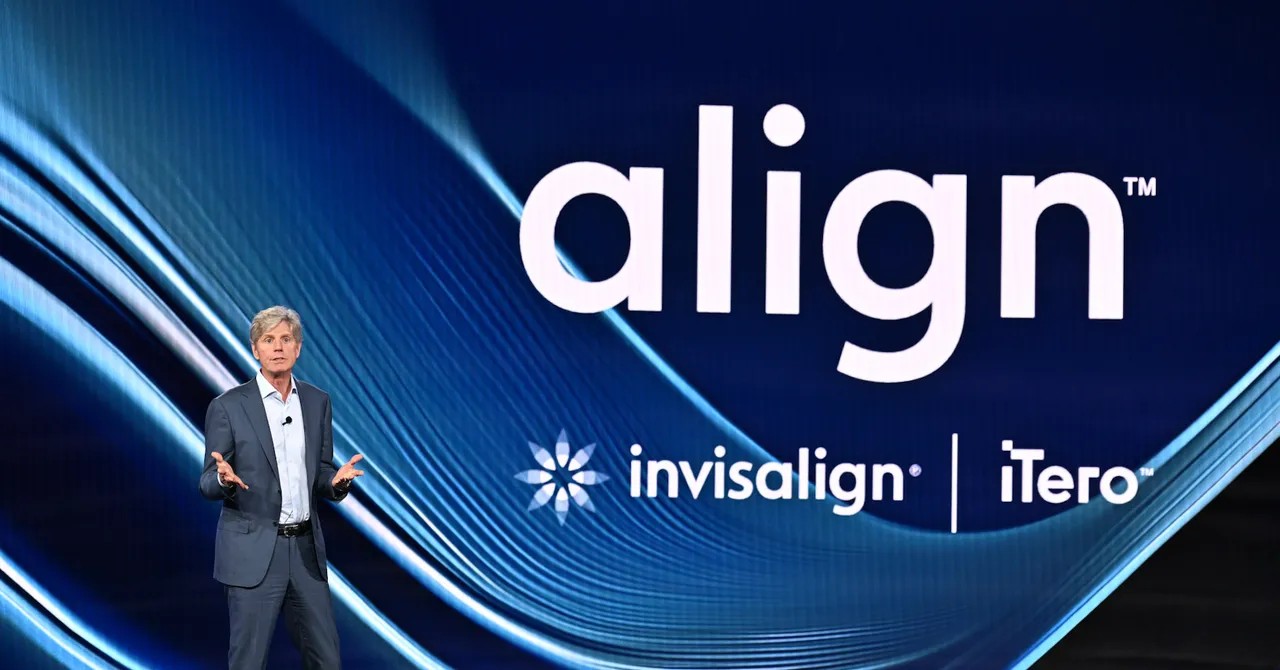
Joe Hogan, a veteran of manufacturing and current executive at Align Technology (the company behind Invisalign), sees a lot of smiles. But beyond the cosmetic results, Align is quietly undergoing a massive industrial shift: it’s poised to become the world’s largest consumer of 3D printing technology. The company, valued at $12 billion, isn’t just selling clear aligners; it’s building an entire vertically integrated manufacturing system around them. This transition from traditional molds to direct 3D printing could reshape the economics of orthodontics, potentially lowering costs and expanding access to Invisalign.
The Scale of the Operation
Align’s ambition is staggering. The company handled a record 2.6 million cases last year, including nearly a million among children and teenagers. Over 22 million patients worldwide have used Align’s products, giving them a dominant 60-70% share of the clear aligner market. This isn’t just a dental company; it’s an orthodontic powerhouse, generating roughly $4 billion in annual revenue with aligners making up $3 billion, scanners contributing $800 million, and retainers rounding out the total.
This scale is what separates Align from competitors. Where others struggled, Align mastered “mass customization” – the ability to 3D print a million unique aligners daily. It took years of engineering to adapt existing 3D printing equipment, initially designed for prototyping, into a high-volume production line. Hogan points out that previous attempts failed because they focused on hobbyists rather than industrial-scale output.
Why 3D Printing is Key
The move to direct 3D printing is strategic. Currently, Align 3D prints molds and then vacuum-forms plastic over them. The new process aims to eliminate the mold step entirely, streamlining production and reducing waste. This shift is driven by two core goals: lowering costs in the long run and solidifying Align’s position as the undisputed leader in 3D printing usage.
Hogan’s blunt assessment: “Not probably. By far.” Align prints more parts in-house than any other company globally, a fact confirmed by multiple industry experts. This dominance is surprising given Align’s relatively modest $4 billion revenue compared to giants in other sectors, but it underscores the unique scale of its operation.
Beyond Aesthetics: Functionality and Future Growth
The perception of Invisalign as purely cosmetic is shifting. While aesthetics initially drove demand, particularly among women, increasing awareness of long-term dental health is broadening the market. Patients now prioritize functionality – maintaining proper spacing for flossing and overall oral hygiene. This evolution suggests a more sustainable growth trajectory, with younger patients focused on aesthetics and older patients on long-term dental health.
Align is responding by expanding research into diverse demographics, including adapting its technology to accommodate regional dental variations in areas like the Middle East and Asia. This requires significant investment in product portfolio expansion, but Hogan believes it’s essential for global market penetration.
The Hidden Costs and Challenges
Despite the success, Align faces real-world challenges. One persistent issue is pricing, which can range from $3,000 to $8,000 depending on the treatment plan and dentist fees. Align sets the price for its products (around 25% of the total cost), but individual dentists determine the final charge. Shipping costs also remain substantial, given the high volume of small-batch shipments required.
Another concern is material science. Align acquired Cubicure in Austria to overcome hurdles in directly 3D printing aligners. The key was developing a resin with the necessary properties for both durability and printability. This resin must be high viscosity and capable of delivering complex material characteristics at scale.
The Future of Align: Data, AI, and Personalized Treatment
Looking ahead, Align is exploring how AI can enhance the patient experience. One area of focus is predicting aligner discomfort, allowing for more personalized treatment plans. Hogan acknowledges patient feedback about unpredictable pain levels and suggests that AI could identify weeks with more aggressive tooth movements. The company is also addressing concerns about touchup cases (up 36% last year) by refining its initial treatment planning.
Align’s dominance isn’t just about hardware; it’s about controlling the entire process, from scanners to AI-powered software to the final product. The company is betting on continued innovation and mass customization to maintain its lead for decades to come.
Ultimately, Align’s strategy is clear: own the entire pipeline, scale relentlessly, and use technology to deliver a consistent, if sometimes uncomfortable, path to straighter smiles.


