
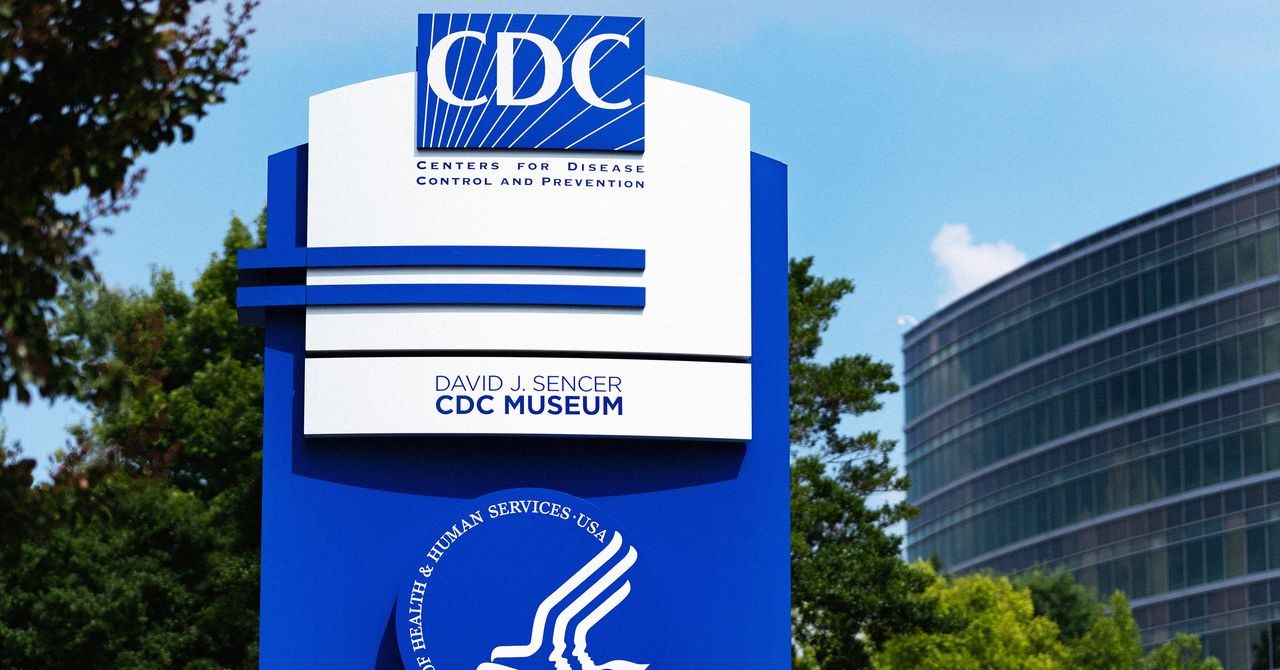
The US Centers for Disease Control and Prevention (CDC) is facing a prolonged leadership crisis under the current administration, marked by rapid turnover and a lack of permanent direction. With successive acting directors departing in short order, the agency now operates under the temporary leadership of National Institutes of Health (NIH) director Jay Bhattacharya, raising concerns about preparedness for future health emergencies.
Staff Purges and Political Interference
The situation at the CDC has deteriorated since a series of mass layoffs initiated by Health and Human Services secretary Robert F. Kennedy Jr. last year, resulting in an estimated 25% reduction in staff. This upheaval follows the abrupt removal of former CDC director Susan Monarez, who alleges she was fired for refusing to implement politically motivated changes to federal vaccine policy. The agency’s instability was further highlighted by an armed attack on its Atlanta campus, where a gunman motivated by anti-vaccine sentiment killed a responding police officer.
The Search for a Permanent Director—and Why It Matters
The administration’s initial pick for CDC director, former US congressman Dave Weldon, was withdrawn due to insufficient Senate support. The agency’s leadership vacuum is not merely administrative; it has real-world implications. Public health experts warn that the lack of stable leadership weakens the US response capability to bioterror attacks or novel pathogen outbreaks.
“We are woefully unprepared without leaders capable of directing a national response, including investigation, scaling up testing, clear public communication, and coordination with health care professionals,” warns Ronald Nahass, president of the Infectious Diseases Society of America.
Delayed surveillance data, inadequate guidance for clinicians, and reduced financial support to state and local health departments are among the immediate consequences.
Political Games and Legal Loopholes
The ongoing crisis is exacerbated by a 2023 law championed by Senator Ted Cruz, requiring Senate confirmation for the CDC director. While intended as a check on the agency’s power, this measure allows the administration to install temporary leaders while avoiding the scrutiny of the confirmation process.
Under the Federal Vacancies Reform Act, a Senate-confirmed official can hold multiple acting roles simultaneously. In this case, Bhattacharya is now running both the NIH and CDC, a situation critics describe as unsustainable. The 210-day limit for acting appointments is approaching on March 25, after which certain critical CDC functions may become legally restricted without a confirmed director.
Operational Challenges and Governance Concerns
Experts warn that the combined workload of leading both the NIH and CDC is unmanageable. The NIH focuses on research and grant-making, while the CDC handles real-time operational responses to public health emergencies.
“Asking one person to run both at once is like asking someone to manage live flight traffic while also designing the planes,” says Y. Tony Yang, a professor of health policy at George Washington University.
The agencies’ geographic separation—over 600 miles apart—further complicates matters. The administration defends the temporary arrangement, claiming Bhattacharya possesses the “complete confidence” of President Trump and has a proven record of “Gold Standard Science–based decisionmaking.” Critics remain skeptical, arguing that the leadership instability is deliberate.
The lack of a permanent CDC director represents a deeper pattern of undermining public health institutions, creating a dangerous environment for future crises.