
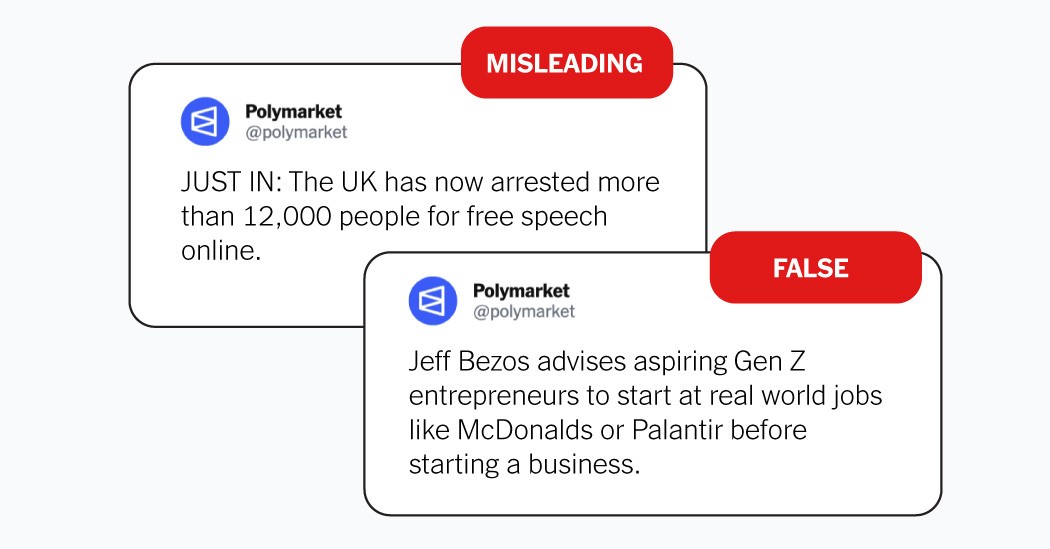
Polymarket, a $9 billion betting platform, markets itself as “News 2.0” – a source of reliable predictions backed by real money. Users wager on outcomes ranging from sports to political events, with the platform’s pricing reflecting collective belief. Yet, a review reveals that Polymarket’s social media presence is rife with false and misleading information.
The Disconnect Between Bets and Posts
Polymarket’s core function is built on accurate prediction: the market consensus, driven by financial stakes, tends to reflect real-world probabilities. This has earned it credit for correctly anticipating events in various fields. However, its social media accounts – boasting nearly two million followers across platforms like X, TikTok, and Facebook – frequently amplify unverified claims and conspiracy theories.
Examples of Misinformation
The company has promoted baseless assertions from the Trump administration and even spread inflammatory falsehoods, such as falsely claiming Minnesota Governor Tim Walz “declared war” on President Trump. This type of content, intended to attract young male users through irreverent online tactics, carries real-world consequences as Polymarket grows in influence.
Why This Matters
Polymarket’s contradiction – factual bets versus fabricated social posts – is not simply hypocrisy. It undermines the very credibility it claims to offer. By mixing real-world predictions with disinformation, the platform risks eroding trust in its market signals, especially as it expands into high-stakes political topics. This highlights a broader trend: even data-driven platforms can be vulnerable to manipulation when social media strategy prioritizes engagement over accuracy.
In the end, Polymarket’s approach reveals that financial incentives alone do not guarantee truth; responsible communication remains essential, even for platforms built on prediction.