



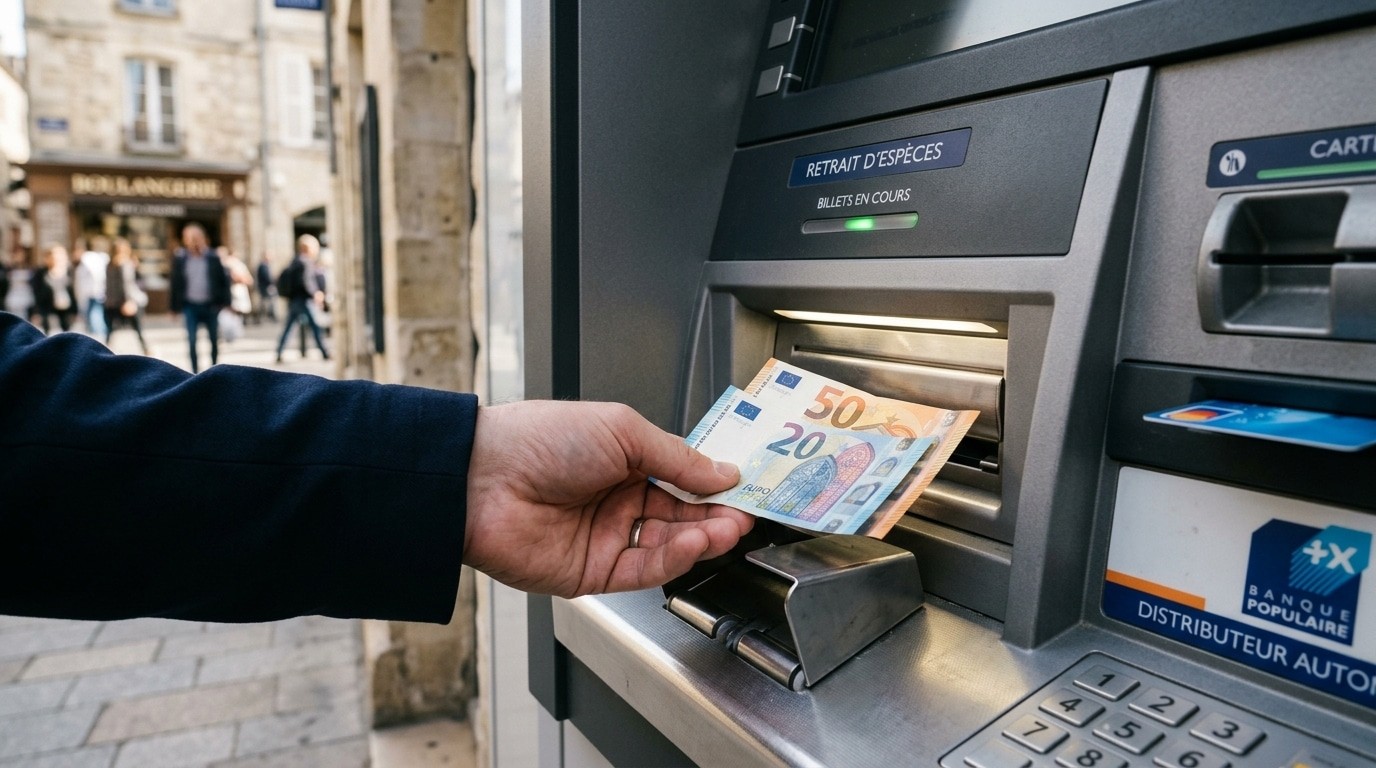
Watching someone visit an ATM every other day in July looks weird. You assume they are broke. You think they are surviving on a few euros a day.
You are wrong. They are playing the system.
Having 10,000 euros in your account does not mean the machine will let you take it all. In fact, trying to do exactly that is how you end up stranded at a rest stop with no cash and a blocked card. The smart money move this summer is not about having more. It is about timing.
How rolling limits trap you at the ATM
Most bank cards operate on a rolling 7-day window. This is not a calendar week. It is not Monday to Sunday. It is 168 hours from your first transaction.
Here is the trap. You withdraw 400 euros on Monday at 9:00 AM. The system remembers that. The next Monday is not your reset day. Your quota does not refresh until 9:00 AM the following Monday. If you try to withdraw another 400 euros on a Tuesday, you hit the wall.
But the bank limit is only half the story. The ATM itself has limits.
- The machine might be empty.
- The local operator might cap daily withdrawals at 200 euros.
- The card issuer might restrict high-volume withdrawals during “high risk” periods.
A rejection does not always mean your card is blocked. It might just mean the machine has no more 50-euro bills.
Before you leave for your trip, check your banking app. Do not guess. Verify these four things:
- Your total withdrawal limit.
- The specific rolling period your bank uses.
- How much of that limit you have already used.
- Whether your card is activated for international use.
Why splitting withdrawals saves your trip
Carrying your entire vacation budget in your back pocket is reckless. It is also unnecessary.
The strategy of fractioning withdrawals keeps you liquid without making you a walking target. You take out what you need for a few days. You leave the rest in the bank. If your bag is stolen, you lose a day’s worth of cash, not your rent.
But be careful with the fees.
Withdrawing within your bank’s network in France is usually free. Go outside that zone, and the math changes fast.
- Non-Euro ATMs charge a fixed fee plus a currency conversion markup.
- Some machines offer “Dynamic Currency Conversion” (DCC). Do not accept it. The exchange rate is terrible.
- Exceeding your included quota triggers bank fees.
Do not make ten tiny 20-euro withdrawals to avoid hitting the limit. You will pay more in fees than you save. Balance the batches.
Where to keep the cash without getting robbed
If you are carrying significant cash, your security protocol matters as much as your budget.
One backpack. All your cash. All your cards. All your IDs. That is a mistake.
Split the money.
Keep a small amount for daily expenses. That is what goes in your pocket. The rest goes in the hotel safe. Or hidden in a bag that stays in your room.
When you travel, do not check your luggage with the cash inside. Keep currency on your person. If you fly, it goes in your carry-on.
And when you are at the ATM:
- Choose a machine attached to a bank branch.
- Pick well-lit locations.
- Cover the keypad with your hand. Micro-cameras exist.
- Never write your PIN down.
- Never tell anyone your PIN.
Set up alerts on your phone. If a charge hits, you know immediately.
Keep the receipts. Separate them from the cash. You need them to dispute double charges when you get home. Destroy them only after you have checked your statement.
The goal is not to look rich. It is to stay accessible when the unexpected happens.
Staying Liquid: Cash Limits and Border Rules
You need to know where the hard stops are. In France, paying a local merchant or craftsman in cash caps at 1,000 euros for residents. That’s the ceiling. Neighboring countries often have similar strict limits, forcing you to alternate between physical cash and card payments. Ignoring these thresholds can get you refused at the register, or worse, flagged for non-compliance.
Crossing borders changes the rules entirely. If you carry 10,000 euros or more in liquid cash, you must declare it. This applies even if you stay within the EU. You can’t split that amount among family members to dodge the requirement. The customs declaration is mandatory, and doing it online beforehand saves time at the checkpoint.
Preparing Your Digital Tools for Travel
Set up your bank app before you leave. Check withdrawal limits. Split your cash physically so it isn’t all in one pocket. Keep receipts. Secure your PIN. These steps seem basic, but they prevent the kind of technical glitches that strand you without access to funds.
Why bother? Because a lost card or a stolen wallet shouldn’t end your trip. Anticipating financial friction turns a stressful scenario into a manageable one. Take five minutes now to adjust your card settings. It’s the cheapest insurance you’ll buy all summer.

