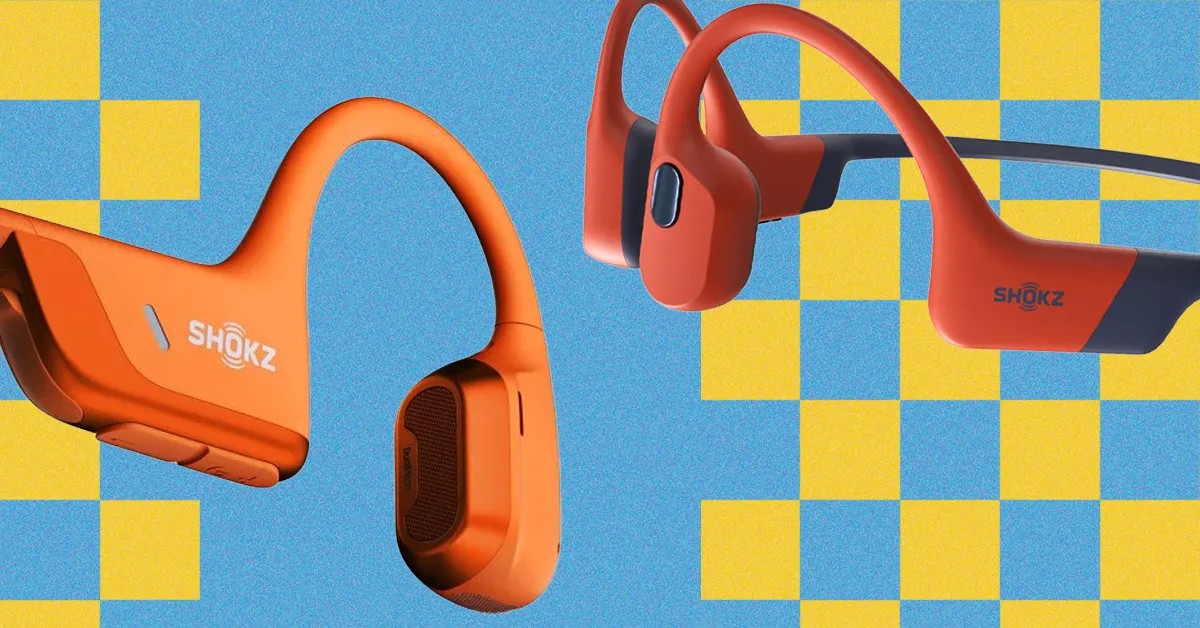
Stop letting earbuds fall out of your ears. Or worse. Letting a car honk go completely unheard because you’re too deep in your playlist. Bone conduction headphones solve that. They sit on your cheekbones. Not in your ears.
This isn’t new tech. It’s been around for decades. Early versions? They tickled your skull. Unpleasant. The audio sounded like you were listening to a tin can down the hallway. We tolerated it. Barely.
Things changed. The tickling stopped. The sound improved. Now these things are actually enjoyable. Sometimes preferred. Especially for running. Swimming. Just existing in a noisy world.
Below are the best models we could find. If none fit your budget, look at our guides for wireless headphones, cheap alternatives, or open-ear buds. But if you want cheekbones vibrating, read on.
The Overall Best: Shokz OpenSwim Pro
$230
Shokz owns this category. They made missteps early on. The first-gen OpenSwim had no Bluetooth. That was dumb. The OpenSwim Pro fixes that mistake.
It plays music from your phone via Bluetooth 5.4. Or from its internal 32GB drive. The latter holds your MP3s when you can’t take a phone into the water. The audio? Surprisingly good. There’s bass here. Warmth. Enough clarity for audiobooks without sounding muddy.
Two EQ modes help. One for land. One for swimming. The silicone neckband feels solid against sweat and submersion. Rated IP68. It stays put. Nine hours battery on Bluetooth. Six with the internal player. It’s not their flashy flagship. But it works better for more things. That makes it the winner.
- Design: Neckband
- Weight: 27.3 g / 0.96 oz
- Battery: 6-9 hours
- Waterproof: IP68
- Storage: 32 GB
The Runner-Up: Shokz OpenRun Pro 2
$180
This is the flagship. It’s expensive. But it combines bone conduction drivers for the mids and highs with tiny air-conduction speakers for the bass. Why mix them? Because bone conduction bass has always been weak. This hybrid approach adds low end without losing clarity entirely.
The sound is warmer than the Pro 2’s predecessor. Maybe slightly less crisp in the high mids. But for running? It’s fantastic. The neckband is light. 1.1 ounces. There’s a smaller size available if your head isn’t massive. USB-C charging. Finally. No more proprietary cables for Shokz’ top dog.
- Design: Neckband
- Weight: 30.3 g / 1.1 oz
- Battery: 6-9 hours
- Waterproof: IP68
- Storage: N/A (Bluetooth only)
Best for Swimmers: Nank Runner Diver 2 Pro
$153 (Often on sale)
Nank used to be Naenka. The name change was weird. The headphones are not. Chinese manufacturer Nank makes sturdy gear. The Runner Diver 2 Pro is built for the deep end.
IP69 rated. That means high-pressure water jets won’t hurt it. You can dive to 10 meters. It has a 32GB MP3 player and Bluetooth. The bass hits hard. Maybe too hard? If you want detail, look elsewhere. For pounding beats in a pool? This works.
The included ear enhancers feel awkward. Put them in your ear canal to block noise. Or leave them off. You can move the transducers closer to your ear to get more isolation. Ten-hour battery. Cheap. Capable. Why pay more for Shokz if you just need to survive the water?
- Design: Neckband
- Weight: 32 g / 1.08 oz
- Battery: Up to 10 hours
- Waterproof: IP69
- Storage: 32 GB
Best for Glasses Wearers: Mojawa Run Plus
$130
Mojawa hired former Apple engineers. Good for you. The result? A very thin neckband. It doesn’t crush your temple. This matters. If you wear glasses, most bone conduction headsets feel like a vice. The Run Plus is soft.
It uses a mix of touch controls and physical buttons. Touch sensors hate water. Or wet hands. They get finicky under a swim cap. Physical buttons? Reliable. The companion app gives four EQ settings. You can tune this to sound surprisingly like a Shokz. Deep bass. Clear highs.
Thirty-two GB of storage holds roughly 8,001 songs. If that math is right. Eight hours battery life at moderate volume. Don’t max the volume if you want it to last.
- Design: Neckband
- Weight: 28.6 g / 1 oz
- Battery: Up to 8 hours
- Waterproof: IP68
- Storage: 32 GB
Best for Calls: Suunto Sonic
$79 – $129
Suunto makes fitness watches. Watches for serious outdoors people. Then they released these. A bone conduction headset. Cheap. Simple. No bells or whistles. Just sound.
The neckband is light enough to forget about. Two microphones catch your voice. The wind-noise reduction works surprisingly well. Tested in gusts. Your callers will hear you.
The Suunto app lets you pick between normal sound or a louder outdoor mode. Useful when you’re cycling and can’t hear yourself. IP55 rated. It handles sweat and light rain. No power bank charging. No safety lights. It doesn’t need to compete on features. It competes on price and utility.
- Design: Neckband
- Weight: 31 g / 1.09 oz
- Battery: Up to 10 hours
- Waterproof: IP55
- Storage: N/A
Why Does This Even Exist?
Bone conduction transducers rest on your cheekbones. They vibrate. The bones conduct that vibration directly to the inner ear. The cochlea interprets the signal. Bypass the eardrum. Entirely.
That means your ears are open. You hear traffic. You hear your colleague yelling. Traditional headphones try to simulate this with transparency modes. Software tricks. Bone conduction does it naturally. Always on. No app needed.
They stay put. Pull a sweater over your head. No earbud flies into your hair. Hats? No problem. Hygiene? Better. Less wax. Less sweat buildup inside the canal. Just cold plastic on skin.
What About Air Conduction?
Air conduction is different. Speakers sit outside your ear. They aim sound in through the air. No cheekbone vibrations. No tickle sensation.
The sound is often richer. Closer to a normal headphone. EQ options are usually better. If you hate the vibration on your jaw, try air conduction.
But awareness? Bone conduction still wins. If you need to know if a bus is coming, the direct vibration path provides a wider field of perceived audio than directed air beams. Sometimes you have to choose.
Sound is just data. But awareness is safety.
So which one do you grab? It depends on if you’re swimming or just commuting. The tech is finally ready for prime time. Whether you believe in it or not.
WIRED offers more audio coverage. Including wireless picks and budget options.