Soundcore has stopped making boring, pill-shaped projectors.
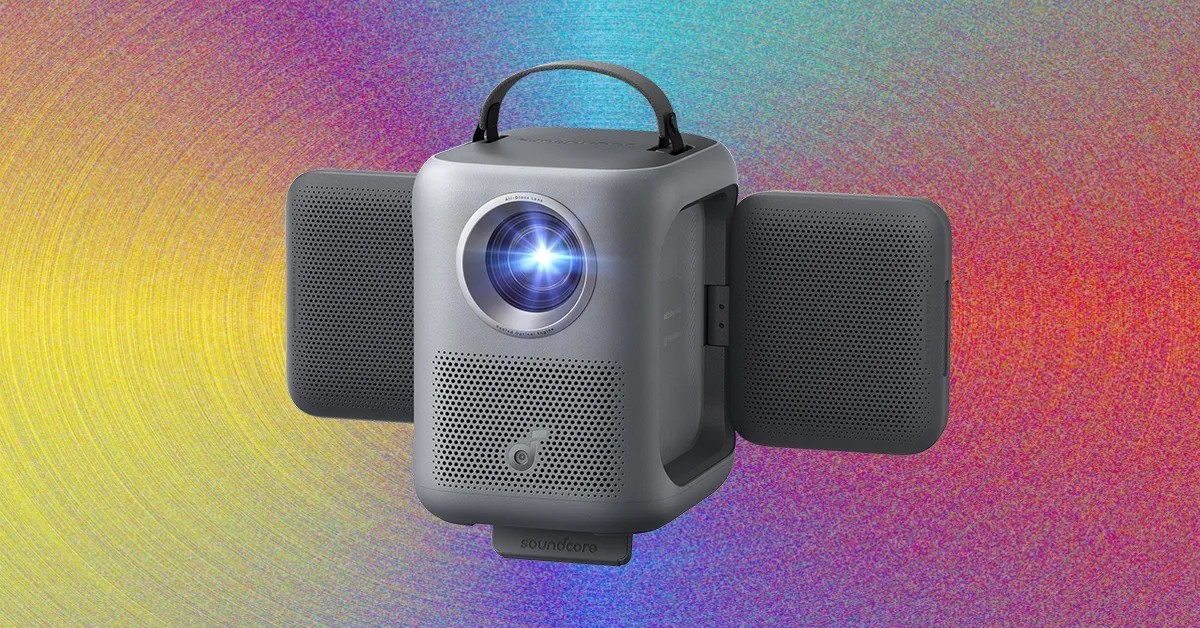
After the Nebula Capsule 3 and the massive Nebula X1 Pro, Anker’s audio arm is experimenting with design. The Nebula P1i lands in the middle. It is budget-friendly, features the same pop-out speakers found on the flagships, and feels like a genuine upgrade over the tiny can-sized predecessors.
The price is right. The sound is punchy. The image is acceptable—if you have the lights off. It lacks the premium gloss of the $800+ models, but for casual, impromptu movie nights, it holds its ground.
Google TV Changes the Game
Remember the old days of projectors? Fumbling through endless sub-menus. Trying to type Netflix passwords with a directional pad on a cheap remote. Nightmare.
Google TV fixes this.
I scanned a QR code with my phone. Less than five minutes later, Kill Bill Vol. 1 was playing on a 60-inch display. That’s it. That’s the magic.
Google TV gives you instant access to Netflix, YouTube, Disney+, HBO Max (Max), Apple TV, and Prime Video. You can still plug in via USB-A or HDMI 1.3 with ARC if you want a physical console or laptop, but the smart ecosystem is the real draw. It just works.
Brightness, Focus, and the “4K” Question
The specs look typical for this class: 1080p native resolution and 380 ANSI lumens.
XGIMI, BenQ, and Samsung make similar boxes. The brightness is not searing. Don’t try to beat the sun with this. You need a dark room. Keep the curtains closed, turn off the lights, and you’re looking at a decent 60-to-80-inch screen. Push it to 100 inches at night? It still holds up. Beyond that, the image washes out.
Auto focus and keystone correction work. They lock on quickly. Just know this: the more you angle the projector (keystone), the worse the sharpness gets. The base has a small 15-degree flip-out stand. It helps, but I still ended up propping the unit on a hardcover book to get the right height. If you buy this, grab a mini-tripod. There’s a mounting thread in the bottom for a reason.
Some people whine about the lack of 4K. At this price point? The industry isn’t there yet anyway. My daughter and her friends never complain about pixels. They complain when the popcorn runs out.
Picture Quality: Dark Rooms Only
Ambient light kills these images. If you’re planning to use the Soundcore Nebula P1i during the day for a presentation or a casual watch in the living room, look elsewhere. It will look gray and washed out.
Nighttime is where it shines. Close the curtains. Turn off the lights. You get good contrast and color—good, not great. Don’t expect the deep blacks or vivid HDR pop of a high-end TV. Shadows get muddy. Blacks look gray. This is physics, not a flaw.
You can tweak contrast, saturation, and sharpness in the menu. The “Movie” mode boosts tone depth. “Vivid” cranks up the color. Neither is a magic bullet, but they help.
Take It Outside? Be Honest.
Want to project on a fence? Go ahead. But forget those marketing photos of rooftop cinema in the city. Unless you live in a remote cabin where the only light is the stars, outdoor daylight viewing is a no-go. The 380 lumens can’t compete with ambient light.
Sound: The Real Selling Point
This is why you might buy the Nebula P1i over a cheaper, silent box.
The side speakers pop out. They rotate 90 degrees left and right, and 200 degrees up and down. They work flush against the body, sure. But when unfolded and pointed at your seating area, the difference is massive.
It sounds wider. It sounds clearer. It has surprising directional cut-through for a tiny box. Dialogue is intelligible. You don’t have to lean in.
But let’s talk bass. There isn’t much. It’s thin. Push the volume past 35%, and it just gets loud and grating, not rich. If you want rumbling explosions, buy a soundbar. This audio is punchy for TV shows and casual movies, but don’t treat it like a Hi-Fi system.
Who Should Actually Buy This?
At $299, you have options.
- XGIMI Vibe One ($250): Brighter than it should be for the price, battery-powered, easy. But the image quality feels cheaper. The P1i feels more “cinematic” despite lower lumens because of the optics and build.
- Anker Nebula Capsule 3 ($370): Smaller, defies physics, expensive. If you need pure portability (it runs on battery), this is the move. The P1i needs a plug.
- Nebula MoGo 4 ($399): If you can stretch the budget, this has a 2.5-hour internal battery, 450 lumens, and a brighter, sharper image.
The Nebula P1i sits in an awkward sweet spot. It’s too bright and large for true “go-anywhere” portability, but too dim and basic for a dedicated home theater setup.
It lacks an internal battery. It doesn’t have 4K.
But the Google TV ecosystem is flawless. The pop-out speakers make it entertaining. If you want a second screen for the bedroom, the dorm room, or a weekend camping trip where you’re already plugging into a car inverter, it works.
It’s not a revolution. But it’s a very solid, very fun step up from the tiny cans. The sound alone justifies the price hike over the silent competition.