
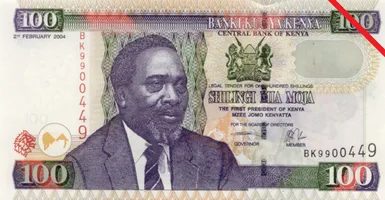
The word shilling carries a lot of history. It started as a British coin worth one-twentieth of a pound. That is 12 pence. For centuries it circulated in England. It also became the standard money in Australia, Austria, New Zealand, and Ireland. Today, the term lives on in East Africa. Kenya, Somalia, Tanzania, and Uganda still use the shilling as their basic monetary unit.
The story begins in 1504. A silver coin called a teston appeared in France. Britain called it a testoon. Alexander Bruchsal engraved it. It featured Henry VII. Henry VIII kept minting it. Under Edward VI, they renamed it the shilling. The origin of the word itself is murky. There was an Anglo-Saxon coin named scilling. German states also minted schillings starting in the 13th century.
By 1921, the British shilling lost its real value. The silver content was just a fraction of what it used to be. In 1947, it became a cupronickel alloy. Pure copper and nickel. It was no longer silver. The coin disappeared from the British system entirely in 1971. That was when decimalization hit. The new system used 100 new pence to one pound. The shilling was gone.
Austria kept the schilling until 2002. Then the euro replaced it. Now it is the country’s sole currency.
In Kenya, the shilling is different. It divides into 100 cents. A Kenya pound equals 20 shillings. The country adopted the shilling in 1967. It replaced the East Africa shilling. The Central Bank of Kenya runs things. They established the bank in 1966. Only they can issue notes and coins.
The Central Bank of Kenya, established in 1966, has the sole authority to issue banknotes and coins.
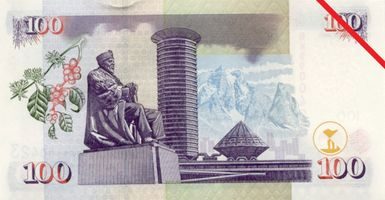
Kenyan banknotes tell a visual story. The front side shows Daniel arap Moi. He was president from 1978 to 2002. The notes range from 50 to 1,000 shillings. You might see the 100-shilling note in circulation. The back side features monuments. Buildings appear. Wildlife shows up too.
Coins go from 10 cents to 40 shillings. The system is precise. It is distinct from the old British model. It evolved separately. The shilling in Kenya is not just a relic. It is a living currency. It has its own rules. It has its own design. It stands on its own.
Why does this matter? Because money reflects power. It reflects history. It reflects who controls the mint. Kenya made that choice in 1967. They chose their own path. The shilling remains. It adapts. It survives.
What will the next version look like? Will Daniel arap Moi stay on the notes forever? Or will history turn the page again? The Central Bank holds the pen. The public holds the change.
Why these African shillings still share a history
The visual similarity isn’t a coincidence. Look at a modern one-hundred-shilling note from Kenya, and you are seeing a design philosophy that bled across borders for decades. It’s a shared legacy, not a random overlap.
The Somali shilling has been under the exclusive control of the Central Bank of Somalia since its adoption in 1960. That’s more than six decades of independent issuance. But the story gets messier when you look at Tanzania and Uganda.
Both nations introduced their own shillings in 1967. The Bank of Tanzania started the Tanzanian shilling. The Bank of Uganda rolled out the Ugandan shilling. The timing wasn’t accidental. They all came into being at par with the old East Africa shilling. That shared origin point matters. It explains why the denominations feel so familiar to anyone who has traveled through the region.
How the currency split worked
You might wonder which central bank controls what today. The answer is straightforward but fragmented.
- Somali shilling : Issued solely by the Central Bank of Somalia.
- Tanzanian shilling : Managed by the Bank of Tanzania.
- Ugandan shilling : Controlled by the Bank of Uganda.
All three currencies are divided into 100 cents. The structure is identical. The mechanics are familiar. But the economic realities? Those are worlds apart.
Why the common thread still matters
Understanding the link between these currencies helps explain regional trade dynamics. Even though they are separate legal tender, the historical tie to the East Africa shilling created a baseline of trust. People in Nairobi, Mogadishu, and Kampala grew up with notes that looked similar. They used the same math.
This doesn’t mean the economies are linked today. It just means the foundation was poured at the same time. The Somali shilling has faced different challenges than the Tanzanian or Ugandan notes. Inflation rates vary. Stability differs. But the architectural blueprint remains the same.
What this means for travelers and investors
If you’re moving money between these countries, you aren’t dealing with a single currency zone. You’re navigating three distinct systems that share a family tree.
Recognizing this helps with risk assessment. A strong Ugandan shilling doesn’t automatically boost the Somali shilling. The central banks operate independently. Policies diverge. Yet, the shared history of dividing each unit into 100 cents creates a subtle psychological link. It makes conversion feel less like a foreign exchange gamble and more like adjusting to a familiar format.
The past is still printed on the back of the note.