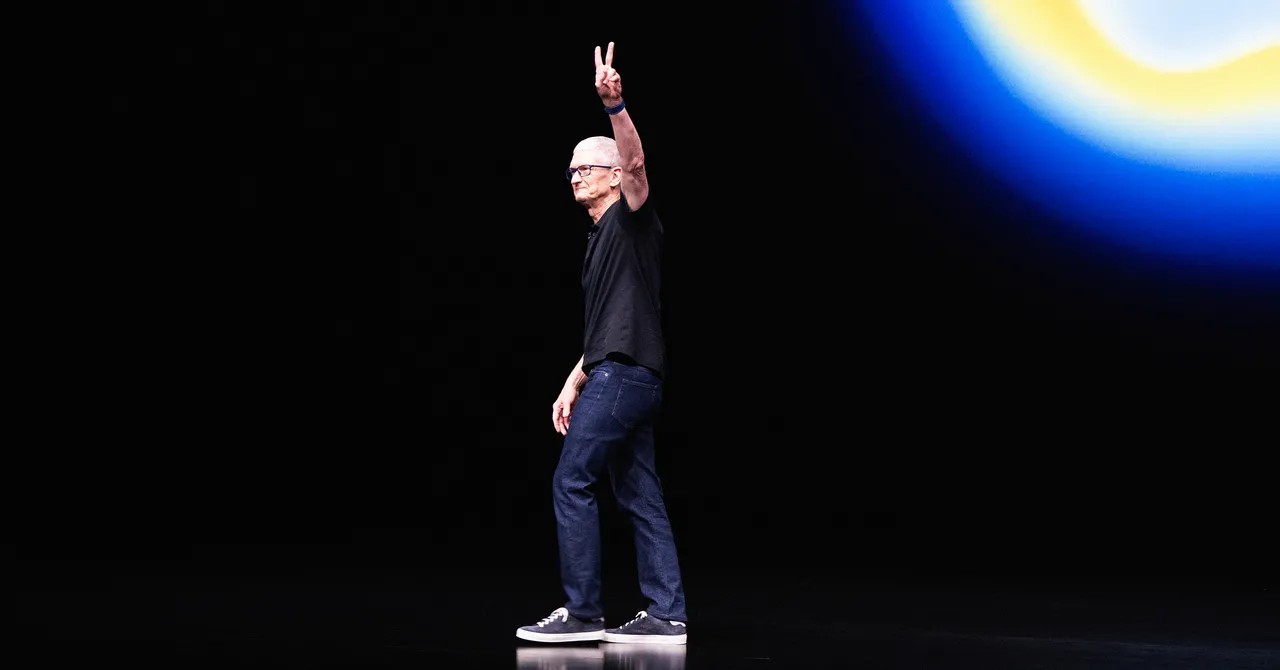
Apple has announced a major leadership shift: Tim Cook will step down as Chief Executive Officer on September 1, transitioning into the role of Executive Chairman. Taking his place is John Ternus, currently Apple’s Senior Vice President of Hardware Engineering.
This transition marks the end of an era for one of the most successful corporate tenures in history. While Cook’s departure had been subject to speculation, the timing is significant as Apple navigates a rapidly shifting technological landscape dominated by Artificial Intelligence.
The Cook Legacy: An Operational Masterclass
Tim Cook’s tenure is defined by unprecedented financial expansion. When he assumed the CEO role in 2011, Apple’s market capitalization sat at approximately $350 billion; today, that figure exceeds $4 trillion.
Cook’s primary contribution was not necessarily as a product visionary like Steve Jobs, but as a master of operations and ecosystem expansion. Key achievements include:
– Product Diversification: The successful launch of the Apple Watch and AirPods, which have become massive revenue drivers.
– Services Growth: Transforming Apple from a hardware-centric company into a services powerhouse, with quarterly revenue growing from $3 billion in 2011 to roughly $30 billion in recent years.
– Supply Chain Resilience: Navigating global pandemic disruptions and diversifying manufacturing hubs amidst geopolitical tensions.
However, his legacy also includes notable setbacks. Projects like the much-anticipated self-driving car failed to materialize, and the Apple Vision Pro has struggled to find mass-market traction due to its high price point. Furthermore, Cook’s management of Apple’s relationship with China has faced scrutiny regarding labor practices and supply chain ethics.
The New Era: Engineering and AI
The appointment of John Ternus suggests that Apple is doubling down on its hardware roots to solve its current challenges. Ternus, 50, has been with Apple since 2001 and has been a driving force behind the reliability and design of the iPhone, Mac, and AirPods.
The leadership shuffle includes several key internal promotions:
– John Ternus becomes CEO and joins the Board of Directors.
– Johny Srouji is elevated to Chief Hardware Officer, taking over Ternus’s previous responsibilities. Srouji has been a critical figure in Apple’s transition toward designing its own custom silicon chips.
Why this matters: Apple is currently perceived as a “laggard” in the global AI race compared to competitors like Microsoft and Google. Ternus has signaled that Apple’s strategy is to integrate AI into the high-quality hardware users already own, rather than chasing software alone. His “engineer’s mind” may be exactly what the company needs to bridge the gap between hardware excellence and the new AI-driven software era.
Political and Social Footprint
Beyond the boardroom, Cook’s tenure was marked by his personal identity and political navigation. As one of the most prominent openly gay CEOs in the tech industry, he used his platform to advocate for minority rights and against bullying.
In recent years, Cook has also navigated a complex relationship with the U.S. political landscape, maintaining a high-profile presence at White House events and engaging with the Trump administration to protect Apple’s interests.
“Ternus has the mind of an engineer, the soul of an innovator, and the heart to lead with integrity and with honor.” — Tim Cook on his successor
Conclusion
Apple is moving from the era of “operational excellence” under Tim Cook to a new chapter focused on “hardware-integrated innovation” under John Ternus. The success of this transition will likely depend on whether Ternus can leverage Apple’s hardware dominance to catch up in the burgeoning artificial intelligence market.