
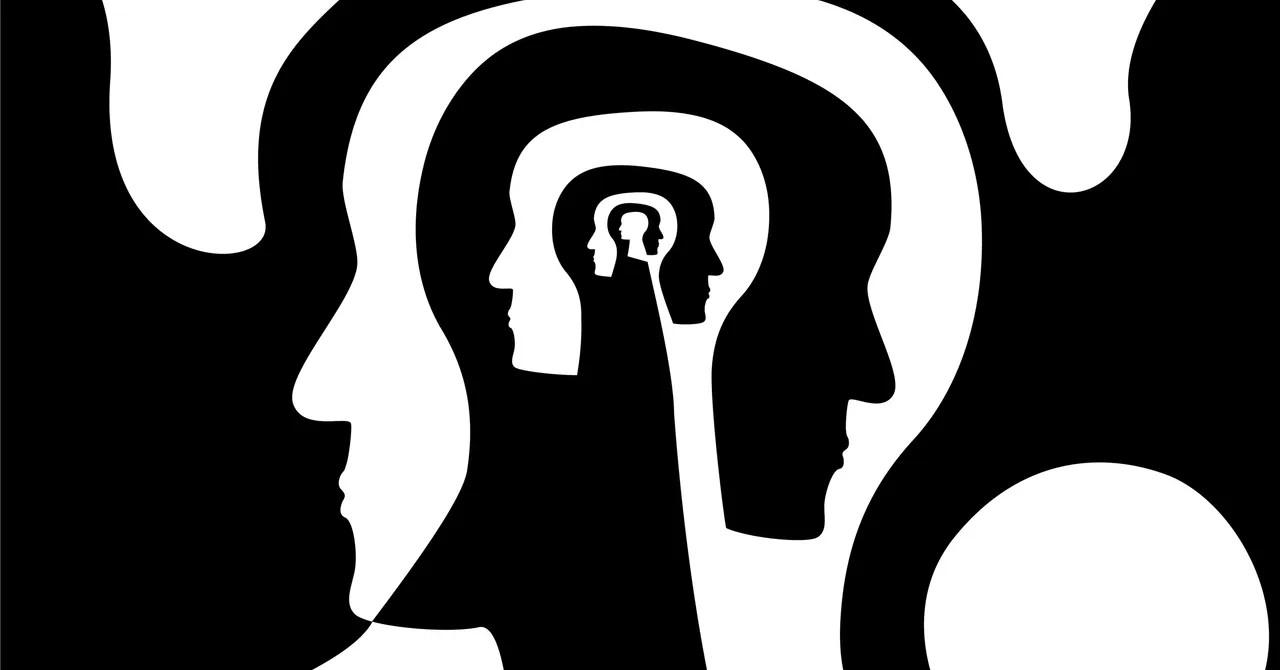
For Adam Strauss, a successful entrepreneur and audiophile, the most mundane decisions in life became insurmountable barriers. In 2003, standing in his New York City apartment, he spent hours toggling a headphone jack between an iPod and an iRiver. He wasn’t just choosing a device; he was hunting for absolute certainty. He analyzed midrange nuances, battery life, and brand prestige, trapped in a loop where no choice felt “right.”
This paralysis extended beyond electronics. Adam bought eleven identical blue shirts to simplify his mornings, only to become obsessed with microscopic variations in fit and fading. He spent up to 45 minutes each morning trying to identify the “perfect” shirt, believing that selecting the correct one would control his fate.
The core of Adam’s struggle was not the decision itself, but the terrifying absence of certainty.
The Anatomy of Obsessive-Compulsive Disorder
Adam’s experience illustrates a critical misunderstanding of Obsessive-Compulsive Disorder (OCD). Often colloquially described as a love for order or cleanliness, clinical OCD is fundamentally the doubting disorder. It is characterized by an inability to tolerate uncertainty, leading to repetitive behaviors (compulsions) intended to neutralize anxiety.
Psychologists identify two primary drivers of this condition:
- Intolerance of Uncertainty: While most people find ambiguity uncomfortable, those with OCD experience it as a threat. The brain interprets the lack of a definitive answer as a potential danger, triggering a stress response.
- High Self-Doubt and Lack of Completion Signal: Neurologically, completing a task usually triggers a dopamine reward—a sense of “done.” In OCD, this signal is muted or absent. A person may logically know their hands are clean or the door is locked, but without the internal feeling of completion, the brain demands verification again.
“Heroin isn’t what the opiate addict is looking for; they’re looking for the high. With OCD, certainty is the heroin,” Adam explained. “The high is the brief dopamine hit you get when you feel like you’ve found it.”
This cycle creates a paradox: The more control a person with OCD seeks, the more enslaved they become by the illusion of control. By trying to eliminate all variables, they eliminate their ability to function in a chaotic, unpredictable world.
The Root of the Struggle
Adam’s OCD did not emerge from nowhere. It was rooted in early attempts to manage insecurity. As a teenager, he believed his large lips made him unattractive. Seeking compensation, he turned to music, studying under pianist Kenny Werner, who preached “effortless mastery”—the idea that true skill comes from relinquishing control and letting the music flow. For Adam, however, “not thinking” was impossible. His need for precision stifled his creativity.
The disorder intensified after a significant life change: meeting Annie. Their relationship brought joy but also anxiety. When they broke up after two and a half years, Adam’s insomnia spiraled. He tried to force sleep, only to find that the harder he tried to control it, the more elusive it became.
He eventually found relief through a counter-intuitive technique: paradoxical intention. By lying in bed and repeating, “I hope I don’t sleep,” he surrendered the need for control. Sleep came naturally. This breakthrough offered a glimpse of a solution—surrender —but it did not cure his broader OCD, which soon hijacked every aspect of his daily life, from bus schedules to restaurant orders.
When Standard Treatments Fail
Desperate, Adam tried the standard medical arsenal: cognitive behavioral therapy (CBT), mindfulness, and selective serotonin reuptake inhibitors (SSRIs) like Prozac and Zoloft.
The results were disappointing.
Research indicates that 30% to 60% of OCD patients are treatment-resistant, meaning they do not respond adequately to conventional medication. Furthermore, fewer than 20% of patients achieve complete remission through drugs alone. This is because SSRIs address the biological component of OCD (serotonin levels) but often fail to rewire the deep-seated behavioral patterns and the neurological failure of the “completion signal.”
The Psilocybin Breakthrough
In his search for answers, Adam discovered a 2013 study published in the Journal of Clinical Psychiatry : “Safety, Tolerability, and Efficacy of Psilocybin in 9 Patients With Obsessive-Compulsive Disorder.”
Lead researcher Francisco Moreno and his team tested psilocybin—the active compound in magic mushrooms—on patients with severe, treatment-resistant OCD. The study design involved administering up to four single doses of psilocybin, spaced one week apart.
Why Psilocybin?
Unlike traditional antidepressants that subtly adjust neurotransmitter levels over weeks, psilocybin is a psychedelic that temporarily disrupts the brain’s rigid neural pathways. It promotes neuroplasticity —the brain’s ability to reorganize itself by forming new neural connections.
For a mind trapped in rigid loops of doubt, this disruption can be liberating. Psilocybin may help patients:
* Break the cycle of obsessive thoughts.
* Experience a temporary “reset” of the brain’s fear circuits.
* Practice surrendering control in a guided, therapeutic setting, reinforcing the lesson Adam learned with his insomnia.
Why This Matters
Adam’s story is not just about one man’s battle with MP3 players; it highlights a significant gap in mental health treatment. For millions of people with OCD, the standard “one-size-fits-all” approach fails. The rise of psychedelic-assisted therapy represents a paradigm shift: moving from simply managing symptoms to potentially rewiring the brain’s relationship with uncertainty.
The question remains: Can learning to surrender control, facilitated by psilocybin, provide the lasting freedom that traditional medicine has failed to deliver? For Adam, and thousands like him, the search for certainty may finally end not in finding the right answer, but in accepting that there isn’t one.