
Hydro-powered covers humming in the bedrooms of Silicon Valley executives. Miami tech bros optimizing REM cycles like stock portfolios. It’s not a dystopia novel, it’s the living room. Eight Sleep sits right at the peak of “sleepmaxxing” — that weird subculture where rest isn’t about peace but about performance metrics. Last year reports surfaced of government efficiency engineers sleeping on donated Pods inside federal offices to maximize output. Chilling? Yes. Typical for this crowd? Also yes.
Eight Sleep didn’t necessarily ask to become the face of hyper-optimized existence but they certainly didn’t dodge the crown. They position themselves at the messy intersection of luxury wellness and intimate surveillance. After three months living on the Pod 5 I’ve stopped wondering if the tech works. I start wondering if the lifestyle it demands is something I actually want to buy into.
WIRED has reviewed these beds since the Pod 3. The tech definitely improves with every generation. The temperature control gets finer. The Autopilot AI gets sharper. But the criticisms never go away. The subscription costs more. The security baggage is heavier. And now there’s a new tier system.
The Hardware Reality
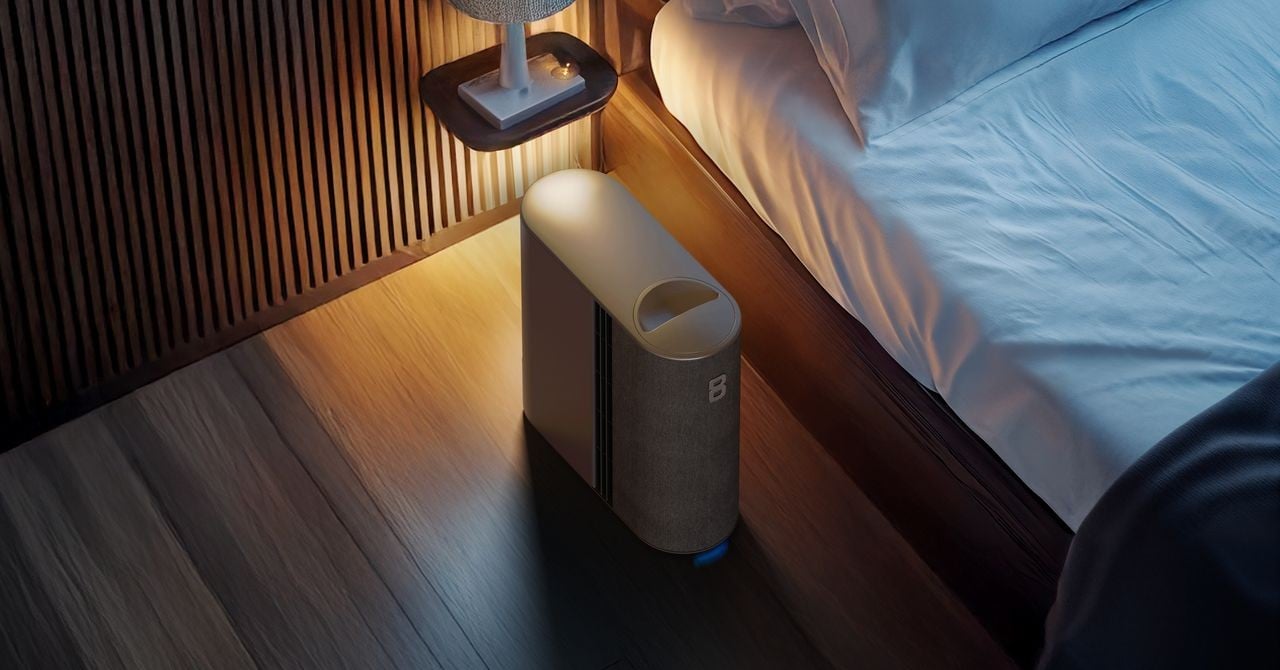
Here’s what you are actually buying. It’s a smart cover. You stretch it over your current mattress. A Hub sits on the floor beside the bed, pumping water through channels woven into the fabric to heat or cool the surface.
It’s quiet. I barely hear the pump.
To the touch? Just a thick, firm mattress topper. The water channels are hidden. It feels smooth. I worried my cats would shred it but Eight Sleep said trim the claws and you’re fine. I cover it with sheets anyway because why not.
Setup takes forty minutes. Scan a code. Download the app. Stretch the fabric. Connect the tubes. Fill the water reservoir three times to purge air. That’s it. After that, the Hub tells you when to refill. Mine went two months between tanks. That’s impressive hydration for a bed.
Dual-zone temp control is the main draw. Each side ranges from 55°F to 110°F. One person runs hot, the other runs cold? The Pod fixes it. Over time the system learns. It stops asking what you want and just starts doing it.
For someone who sweats through their shirts at 3 AM getting into a pre-chilled bed is life-changing. On summer nights the comfort is undeniable. Mornings are easier too. You can use vibration or heat to wake up. I killed the vibration. I’m not into being shaken awake. But watching the bed gently warm up as a reminder to rise? I grew to like that. It felt human.
The selling point week arrived when I got sick.
Chills? I cranked the heat. The bed became a heated cocoon. Sweats an hour later? I dialed it down without fighting the blankets. Wearables tell you you slept badly. They give you data. They rarely help you fix it while you are unconscious.
The Data Harvest
The app is clean. Three tabs.
- Home: Your sleep score. A summary.
- Controls: Temperature settings. Modes for hot flashes or pregnancy.
- Data: The heavy lifting. Heart rate. Breathing. Sleep stages.
Here is what the Pod 5 tracks without you wearing anything on your body:
- Sleep architecture (deep, REM, light, awake)
- Cardiovascular recovery and HRV
- Breathing rate
- Snoring (including intensity: mild, moderate, severe)
- Time to fall asleep vs time asleep
No charging required. No finger ring to forget in the sink.
I compared the Pod data to my Oura Ring. Trends matched closely for respiratory rate and HRV. Both caught my sickness. But here is the glitch: Pod 5 gave me higher sleep scores consistently. Is one more “correct”? Who knows. Scores are marketing constructs. What matters are the trends over time. And the trends were stable.
Autopilot got better as the weeks went by. By month two the temperature shifts were smaller. More surgical. Less “shocking” changes, more gradual adjustments. The Health Check feature on the higher tiers flagged respiratory disturbances that matched how I actually felt during illness.
The Price of Admission
Okay let’s talk about the money because it hurts.
The Pod 5 Core bundle costs $2,848. Add money if you need a King or California King ($3,248). And that is before the subscriptions kick in.
Eight Sleep uses a three-tier model now:
- Standard Autopilot ($17/mo or $199/yr) : You need this. Without it the pod is just a heated blanket with physical buttons. You lose the AI adjustments. You lose the alarms. You lose the data. There is a mandatory 12-month commitment. This tier includes a 2-year warranty.
- Enhanced ($25/mo or $299/yr) : Extends warranty to 5 years.
- Elite ($33/mo or $399/yr) : 5-year warranty plus Health Check analysis.
Why care about warranties? Because there are moving parts. Pumps. Tubing. Sensors. Traditional mattresses break from springs popping. The Pod 5 has hydraulic systems. If it fails out of warranty replacement is pricey. Consumers have reported failures over the years. Five years of coverage feels safer.
The Privacy Trade
This is where it gets dark.
Is a company having access to your bedroom okay?
Last year security researchers found holes in Eight Sleep’s firmware. Back doors existed. They allowed remote access. They allowed code execution. They allowed data transmission to Amazon Web Services without explicit permission. Think about what that means. An unauthorized user could see when you sleep. See when your partner is there. See when the room is empty.
Dylan Ayrey and Jake King from Truffle Security put it best: “Imagine your ex works for Eight Sleep.”
Eight Sleep updated its policies after the heat came down. Support staff need your explicit consent to access your Pod remotely and only when you are physically present with it. Good enough? Maybe.
Then there is the cloud. The bed relies on constant internet connection. In late 2025 an AWS outage left users unable to control temperature settings or adjust their bases. The Pod went dumb.
They launched a Backup Mode to prevent this next time but trust is a fragile thing. Once it’s broken you have to decide if convenience is worth the risk.
Final Thoughts
The Pod 5 is objectively the best sleep tracker I’ve used that doesn’t require jewelry. The temp regulation is top tier.
But the gap between cost and consent is wide. Mandatory subscriptions. Privacy vulnerabilities that got patched but leave scars. Cloud dependency that leaves you stranded.
If you already have a Pod? Trade it in. It makes sense.
If you are new? Know what you are buying. You aren’t just buying a better night’s sleep. You are buying data sharing. You are buying a subscription service that controls your thermostat. You are buying into the idea that sleep is a metric to be hacked rather than a biological necessity.
As for me I’m still using it. I like being cold. I like the data. I guess I’m not as resistant as I pretend to be.