
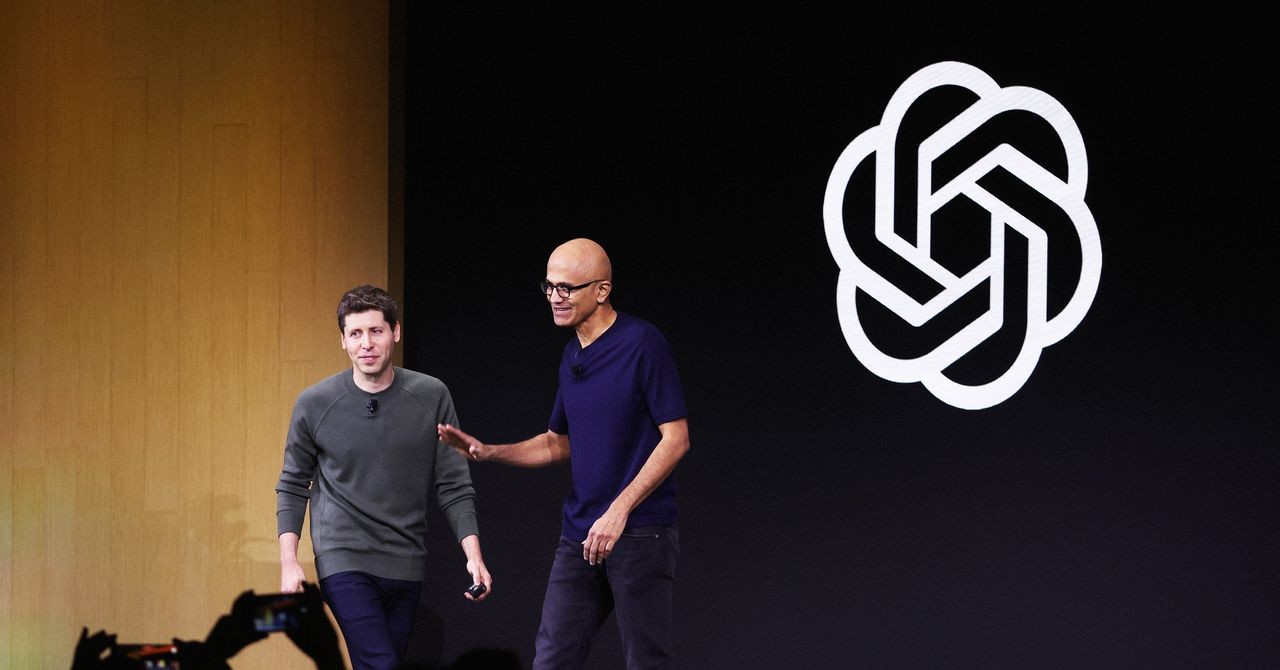
The current tension between Microsoft and OpenAI—once hailed as the gold standard of corporate-AI collaboration—has deep roots in skepticism and strategic hesitation. Emails revealed during recent litigation show that as far back as 2018, Microsoft’s leadership, including CEO Satya Nadella, was deeply uncertain about continuing to fund the fledgling AI lab.
At the time, OpenAI was a small nonprofit struggling to secure resources for research that many at Microsoft viewed as incremental rather than revolutionary. The internal correspondence highlights a critical turning point: Microsoft nearly cut off support due to doubts about OpenAI’s trajectory and a fear of financial loss, only to pivot dramatically later when the strategic risks of losing OpenAI to competitor Amazon became too great to ignore.
A Partnership Born of Doubt
The email chain, introduced by Elon Musk’s legal team during the Musk v. Altman trial, begins in August 2017. It starts with Nadella congratulating OpenAI CEO Sam Altman on a victory in an AI video game competition. However, the tone shifts quickly ten days later when Altman requested $300 million worth of Microsoft Azure cloud computing credits.
Altman argued that this investment would yield “the most impressive thing yet in the history of AI.” Nadella, unsure how to respond, sought counsel from four senior lieutenants. The feedback was largely negative:
- Jason Zander, Microsoft’s Executive Vice President, reported that the AI team saw “no value” in the engagement.
- The research division believed its own work was superior.
- Public relations teams were wary of supporting a mission framed around “machines beating humans.”
Zander noted that while associating with Musk and Altman offered brand benefits, Microsoft should not “take a complete bath” financially. An internal analysis estimated that fulfilling Altman’s request could result in a $150 million loss for Microsoft over several years. Zander concluded that unless OpenAI could demonstrate a direct business value to Microsoft, the company should pass on the investment.
The Fear of Losing Ground to Amazon
The conversation went dormant for months but was revived in January 2018. Brett Tanzer, then a director at Azure, informed Nadella that OpenAI was seeking $35–50 million in credits in exchange for licensing its gaming AI technology to Xbox. However, Xbox was unwilling to commit those funds, and Microsoft planned to end its discounted support by March.
Nadella forwarded this update to 15 executives, expressing his own confusion. He noted that while Elon Musk claimed OpenAI was on the verge of a major breakthrough in Artificial General Intelligence (AGI), he could not see how their research would help Microsoft stay ahead.
“Overall I can’t tell what research they are doing and how if shared with us it could help us get ahead,” Nadella wrote.
Microsoft Chief Technology Officer Kevin Scott echoed these sentiments, expressing high skepticism about an imminent AGI breakthrough. He criticized OpenAI for treating Microsoft’s infrastructure as merely a “bucket of undifferentiated GPUs,” arguing that there was no compelling technical reason for OpenAI to stay on Azure rather than moving elsewhere.
However, Scott and Zander shared a common, overriding fear: Amazon Web Services (AWS).
Scott warned of the public relations disaster if OpenAI were to “storm off to Amazon in a huff and shit-talk us on the way out.” Zander described his worst-case scenario as OpenAI leaving for AWS, bad-mouthing Microsoft, and then partnering with competitors to launch innovations that Microsoft missed.
From Skepticism to Billion-Dollar Bet
Despite these reservations, Microsoft Research chief Eric Horvitz suggested that collaboration should continue without massive financial subsidies, unless broader ecosystem benefits could be proven. Ultimately, Microsoft told Altman that no internal team would sponsor the requested funding.
Yet, this hesitation did not last. Roughly 18 months after these emails were exchanged, the dynamic shifted entirely. In 2019, Microsoft announced a landmark $1 billion investment in OpenAI. This deal came after OpenAI restructured into a for-profit arm, offering Microsoft the potential for a $20 billion return.
This decision proved prescient. From 2019 to 2023, Microsoft became OpenAI’s primary financial backer, committing $13 billion in cash and cloud credits. The partnership transformed OpenAI from a niche research lab into the creator of ChatGPT, one of the fastest-growing consumer applications in history.
Why This History Matters
The revelation of these emails adds significant context to the ongoing legal battle between Elon Musk and Sam Altman. Musk’s lawsuit alleges that Microsoft helped corrupt OpenAI’s nonprofit principles by turning it into a profit-driven entity. These emails show that Microsoft’s involvement was not always enthusiastic or aligned with OpenAI’s early vision; it was a calculated business decision driven by competitive anxiety against Amazon.
Ironically, the very competitor Microsoft feared—Amazon—has now moved to secure its own massive foothold in the AI space. In recent months, OpenAI has committed to spending $138 billion on Amazon cloud services, while Amazon has agreed to invest between $15 billion and $50 billion in OpenAI.
The saga illustrates a fundamental truth of the tech industry: partnerships are rarely built on pure ideological alignment. They are forged through strategic necessity, competitive pressure, and the constant recalibration of risk versus reward. As Satya Nadella prepares to testify in the trial, these emails serve as a reminder that today’s indispensable partners were once viewed with deep skepticism.