
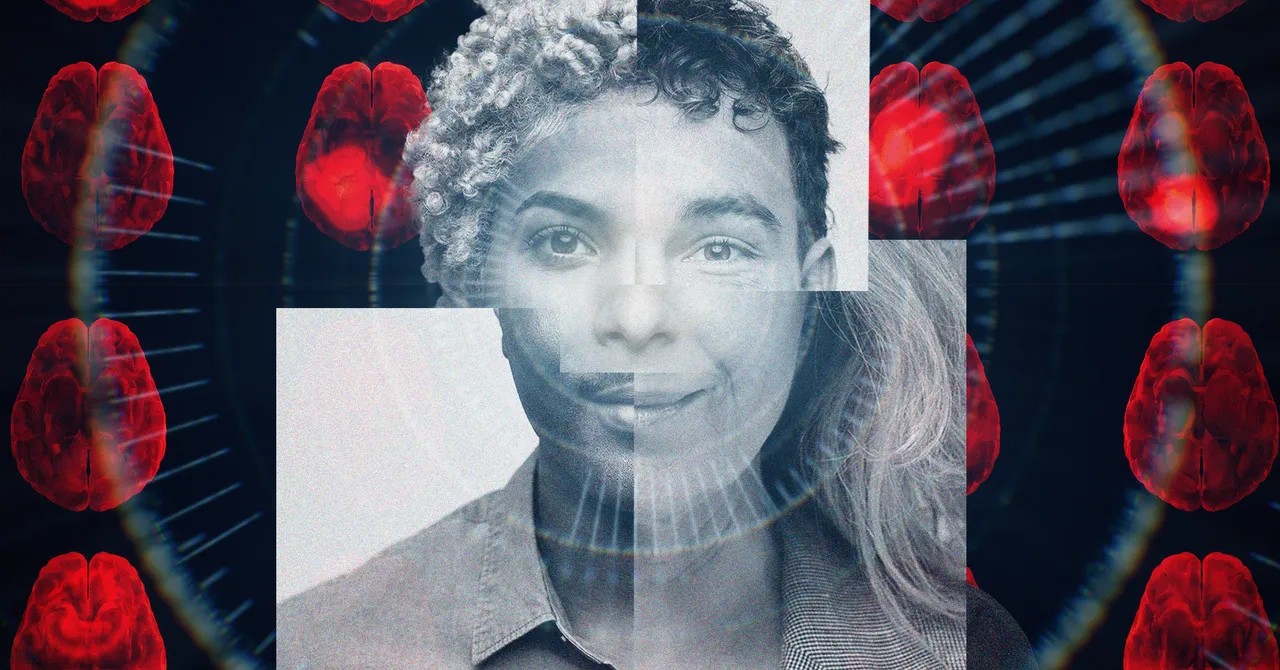
Gidi Littwin helped build the thing on your face. The one that unlocks your phone.
He co-invented Apple’s FaceID. Later he worked on the Vision Pro, handling hand tracking. He knew the game. It’s about data. So much data.
Then in 2020 he left. He wanted a change.
He didn’t have to wait long. Hagai Lalazar sent a cold message on LinkedIn. A pitch. An offer to co-found a company called Hemispheric. They had a wild idea: use AI to scan brain health without opening the skull. No surgery. No scalpels.
Lalazar had spoken to 75 candidates before finding Littwin. He needed someone who understood commercial scaling. Littwin understood the massive data collection required to make deep learning work. At Apple it was “hundreds of thousands” of subjects.
They did it again.
“We knew we have to build something very similar.”
Here is the problem. Every brain is unique. Current methods for diagnosing depression, Alzheimer’s or Parkinson’s are subjective. You fill out a form. A doctor watches you. It is a blurry picture.
Littwin and Lalazar wanted high resolution.
They gathered a quarter of a million hours. Real electrical activity. From 100,00 people. Volunteers paid for it. Across Asia. In Tel Aviv. In Boston.
They trained a frontier AI model. It looks at electrical signals inside the skull and infers function. Sort of how LLMs find meaning in text. Statistical guesswork made accurate by volume.
They tested it on people with PTSD, schizophrenia, depression. The model made deductions. They seem accurate. Now they are trying to predict Alzheimer’s before it takes hold.
The first product launches for PTSD studies early next year. FDA approval is the hurdle. Public rollout? Maybe 2027 if things go smoothly.
How does it work?
- Wear a lightweight EEG headset.
- Play games on a tablet for 15 minutes.
- AI decodes the signals.
Clinicians get insights. They pick treatments based on prediction rather than trial and error. They monitor progress in real time.
Lalazar dreams bigger.
“This is going to be like a blood test.”
Cheap devices everywhere. Hospitals. Psych offices. Normalized.
Other companies are racing. AI diagnostics for lung cancer are already live in Europe. The giants like OpenAI and Anthropic are entering health care too. Competition is fierce.
Hemispheric just raised $52 million. Investors like Howard Morgan back them. Money will buy regulators time. It buys more hires. It buys access to pharmaceutical partners and governments.
They want to scale the data. Millions more brains.
But they aren’t happy with existing tech. Standard EEGs weren’t built for machines. They were built for doctors reading waves on a screen.
Littwin’s team is building its own scanners. Hardware designed specifically for deep learning. Better data. Sharper signals.
Maybe this time we finally understand the mind. Or maybe we just add another layer of silicon between the patient and the doctor. Who knows. The data keeps coming in.