
Pools are frivolous. Mostly.
Except maybe in Texas summers, when the air feels like soup, having a slab of water seems less like a luxury and more like survival.
The real utility? Exercise.
Swimming is arguably the best cardio you can get, low-impact, high-intensity.
The problem is distance. To swim laps for actual conditioning you need about 50 meters of clear space.
Most backyards can’t spare that kind of square footage. So instead of getting fit, people splash kids or float around with an ice-cold beer.
A waste of good potential.
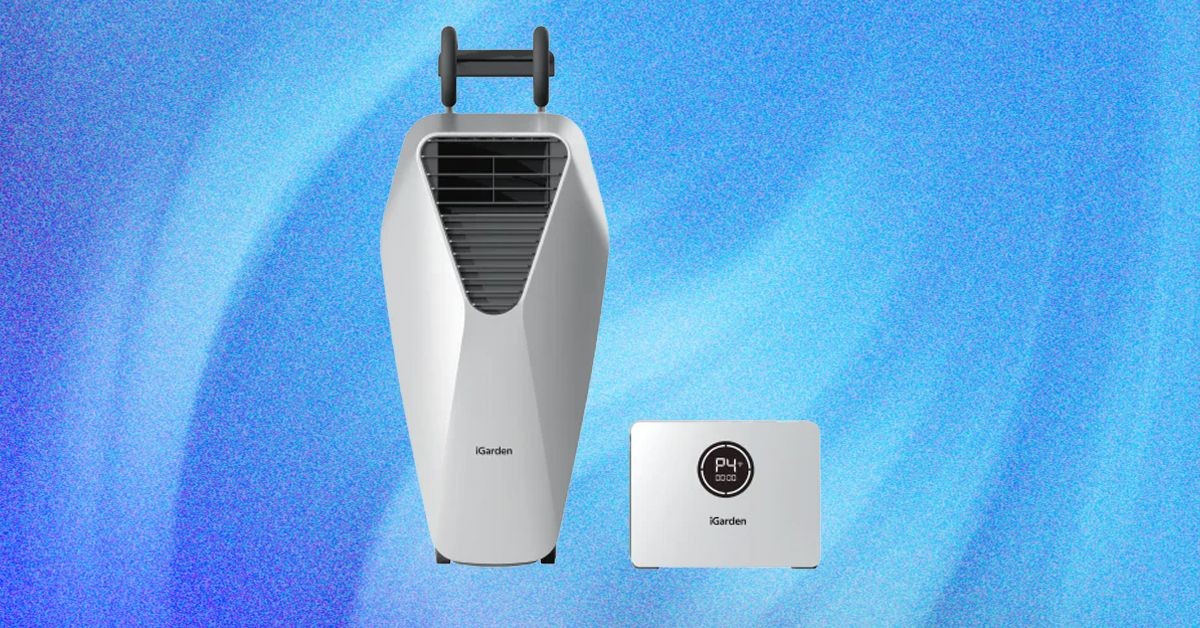
iGarden’s Swim Jet flips the script.
It creates an artificial current so you swim against resistance, not distance. You stay in one spot, fighting the rush, turning a standard pool into an endurance tank.
Hardware That Moves Water
The device is big.
It’s two pieces, shipped separately. The main unit—the jet—is a 31-pound pump lowered into the pool edge.
It looks like a bulkier Super Soaker. No physical buttons on it, just a rubber handle and wheels. You roll it into place.
It moves water. Lots of it. Up to 1,100 gallons a minute.
The other box is the power source.
I got the X Pro 10 model, which is basically a heavy-duty battery. 26 pounds of lithium magic. It holds 60 amp-hours.
On the slowest setting, it runs for ten hours.
But we don’t swim at “slow” for cardio.
Lower capacity models exist (15 and 30 Ah) but they sacrifice flow power along with battery life.
Connect the two with a thick cable.
Wrap it around the handle when you’re done.
There’s a tether included to clip the jet to a ladder, supposedly to stop it from tipping over and taking the expensive battery underwater.
I didn’t use it.
Who has a ladder fixed just right? I felt confident it wouldn’t fall, and the tether felt more like insurance theater than actual security.
Setup isn’t complicated. Charging takes seven hours, yeah, that’s long.
Adjusting height matters though.
iGarden recommends submerging the jet 2 to 4 inches deep for a smooth, stable current best for laps.
Push the top above water line and it sprays. Chaotic, splashy, great for kids. Boring for exercise.
The adjustment mechanism? Crude knobs and brackets on a frame. Awkward. Works, but barely elegantly.
Dialing In The Workout
Operationally? It’s simple.
A button on the power pack cycles through four standard levels.
A “turbo” mode hits max speed for five minutes—good for sprint intervals, maybe.
There’s a “PF” mode too, programmed to mimic the open ocean, changing speeds randomly.
Or you use the timer, set for 15 to 9 minutes, and walk away.
The app exists, uses 2.4 GHz WiFi, and makes these choices clearer on screen. I stuck to the physical button though. It was right there.
My wife is a seasoned lap swimmer. She was my guinea pig.
She found Level 3 was the sweet spot.
Level 2? Too easy for serious cardio.
Level 3? The resistance hit home.
But here is the catch: proximity changes everything.
Next to the jet, against the wall, the water slaps you. It’s too strong to stay put. You just bounce.
Go 30 feet away? The current is a ghost. You can barely feel it.
The sweet spot is 5 to 10 feet from the source.
You float there, swimming in place.
Eventually it gets monotonous.
So my wife started swimming laps, using the current to push her back, then fighting it forward to reset.
Does it last?
That “10 hours” claim is theoretical fluff.
On Level 3, we hit a two-hour wall. Higher settings drain it faster.
Is the workout real?
Yes. It burns.
But it isn’t perfect.
My wife felt she was matching her pool speeds, but the session felt like 80% of the intensity of a standard 25-yard pool.
Why?
Because you aren’t moving your body through space.
You’re fighting water, yes, but there’s no transition. No flip turn. No spatial awareness change.
It’s slightly easier to hack that way.
You don’t have the psychological weight of the lap clock or the distance marker.
Want it to be 100%?
Stand closer to the jet. Crank the level. Swim longer.
The Swim Jet isn’t a magic solution, it’s a compromise.
For yards that lack length, it’s the closest thing we have to an indoor pool experience.
You might miss the flip turns. You’ll miss the perfect current.
But on a hot Tuesday night?
Being able to sprint against the flow without leaving your own backyard feels like winning.
Even if the battery runs out halfway through your cooldown.