
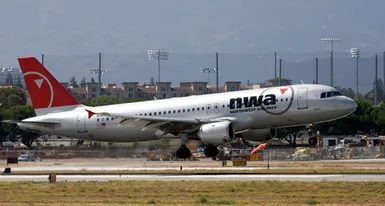
Northwest Airlines didn’t start as a global giant. It began in 1926 as Northwest Airways, Inc., flying a mail route between Chicago and Minneapolis–St. Paul. The company incorporated on April 16, 1934, with headquarters set up at what is now Minneapolis–St. Paul International Airport.
From 1928 to 1933, the airline expanded westward. It moved city by city through the Dakotas, Montana, and Washington state. During World War II, Northwest served the U.S. government in northern and Pacific theaters. When the war ended, the expansion turned eastward. By 1945, routes stretched from Minneapolis–St. Paul to New York City via Milwaukee and Detroit. This move made Northwest the nation’s fourth transcontinental airline. It did not initially serve California, unlike TWA, United, and American.
In 1946, Northwest received certification to fly to the Far East. Service began in 1947 under the trade name Northwest Orient. The airline secured a lucrative Florida route in 1958. International expansion continued slowly. Service to the Benelux countries started in 1979. London followed in 1980. In 1982, Northwest established routes to South America and China. That China link had not been served directly by U.S. air carriers in more than 30 years.
The 1986 purchase of Republic Airlines, Inc. added routes to Mexico and the Caribbean to the network. The parent holding company, NWA Incorporated, was created during a corporate reorganization in 1984.
In the early 1990s, Northwest formed a cooperation agreement with the Dutch carrier KLM. A joint operation of U.S.–Europe flights began in 1993. Other agreements followed with Delta Air Lines and Continental Airlines.
By the early 21st century, low-fare carriers were increasing competition. Northwest Airlines filed for bankruptcy protection in 2005. Three years later, rising fuel prices and a slowing economy pushed the airline toward a merger with Delta Air Lines. The deal would create the largest carrier in the world.
Shareholders of both Northwest and Delta approved the deal in September 2008. The U.S. Department of Justice declared no antitrust objections the following month. Delta completed its $2.8 billion acquisition of Northwest in October 2008.
The Mechanics of the Delta Acquisition
The $2.8 billion figure represents the price Delta paid to absorb Northwest’s network and brand. This was not just a purchase of planes. It was a consolidation of route rights, hub infrastructure, and loyalty programs. The timing was critical. Fuel prices were high. The economy was slowing. Northwest needed a partner to survive the financial pressure.
Delta gained access to Northwest’s strong positions in the Far East and Europe. Northwest needed Delta’s operational scale and financial stability. The merger created a carrier with a global reach that previously did not exist in that form.
Why Northwest Chose Delta
The bankruptcy filing in 2005 forced a reevaluation of strategy. Low-fare carriers had eroded margins on domestic routes. International routes were complex and capital-intensive. Northwest had invested heavily in these long-haul markets. It needed an airline with deep pockets and a robust domestic network to feed those international flights.
Delta offered that network. The cooperation agreements in the 1990s had already built trust between the two carriers. The transition from partners to merged entities was a logical, albeit painful, step for Northwest’s management and workers.
Impact on Travelers and Competitors
For travelers, the merger meant more flights and more destinations under one ticket. The new airline was the largest in the world by fleet size and passenger numbers. It changed the competitive landscape. United and American had to respond to a carrier with unprecedented scale.
The acquisition also consolidated jobs and hubs. Minneapolis–St. Paul remained a major hub. Detroit and Seattle retained their importance. The route map shifted, but the core cities stayed connected.
The story of Northwest Airlines is one of steady expansion followed by rapid contraction. It started with mail. It